Fair Insider · November 2026

Art Basel Miami Beach 2026

Curated Highlights

Dear Clients, Colleagues, and Art Enthusiasts,

Art Basel Miami Beach returns next week with more than 270 galleries! Over the past few weeks, we've reviewed hundreds of gallery previews featuring more than 5,000 artworks. Below is a selection of the standout works we're most looking forward to seeing in person.

This season we prepared for the fair in Collection Pilot, a new art advisory and collection management platform. Gallery previews arrive in every format imaginable: emails, PDFs, online viewing rooms, and Collection Pilot brings them all into one consistent view. The result is a fair seen more completely than ever before, and clients who can review, ask questions and reserve works before the doors open. Fellow advisors and collectors who'd like to see it in action can visit collectionpilot.com.

Enjoy this selection of highlights, and we hope to see you in Miami!

Warm regards,

Victoria Burns


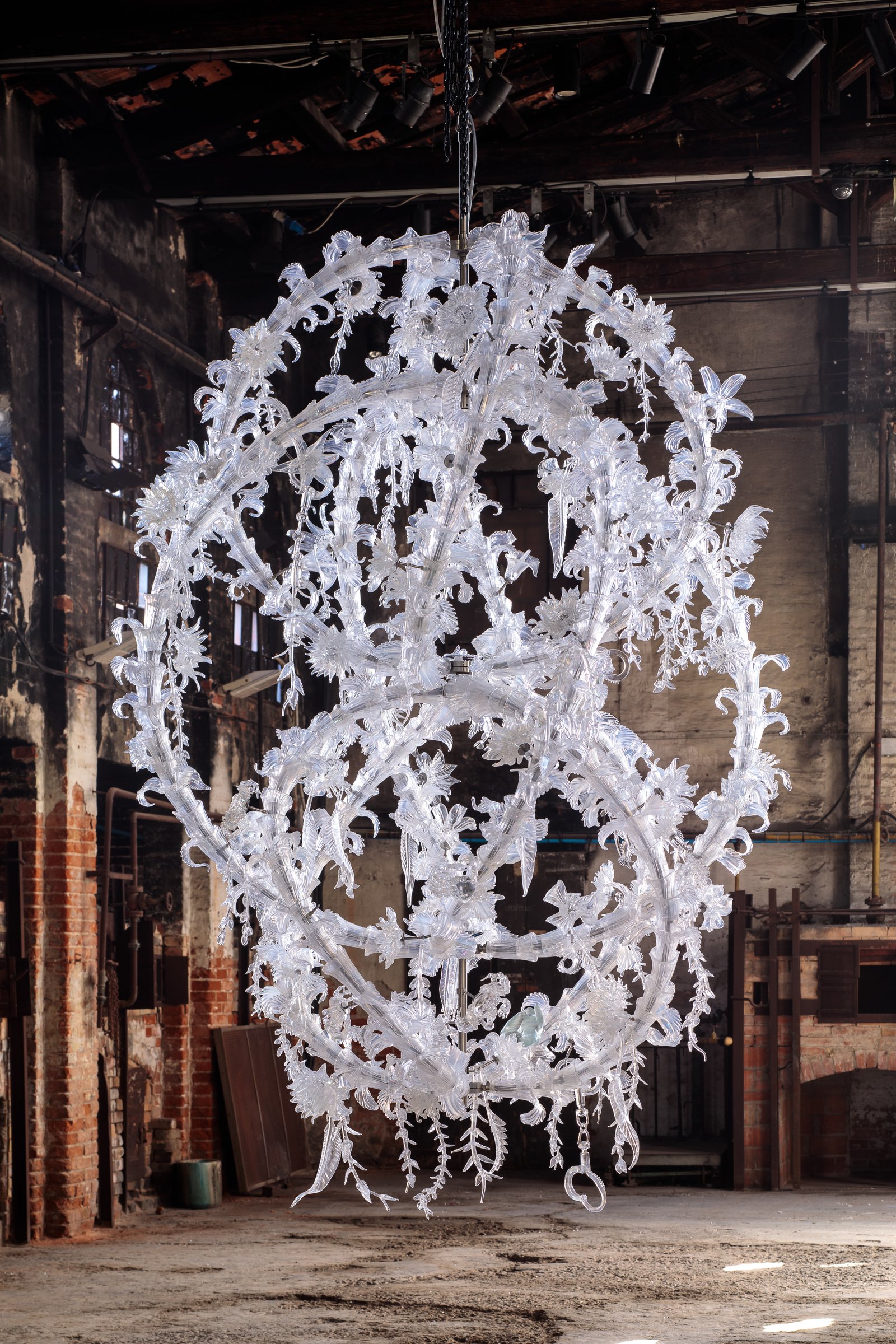
Ai Weiwei, White Chandelier, 2022
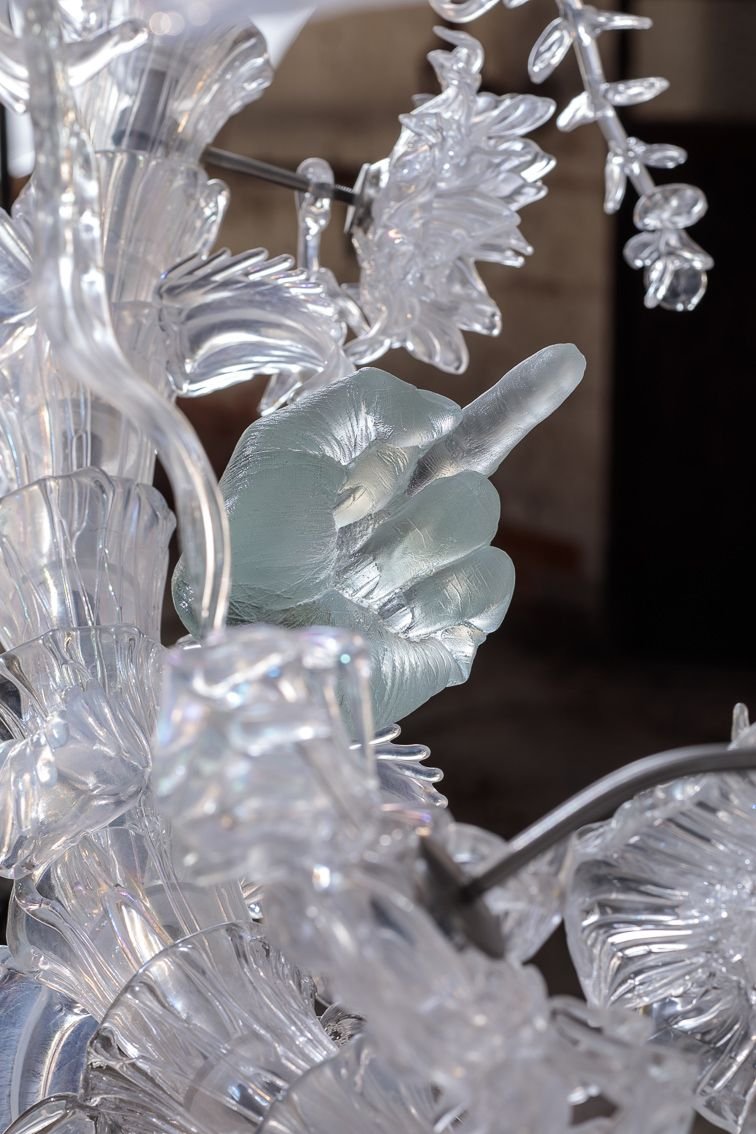
Detail of Ai Weiwei, White Chandelier, 2022

Detail of Ai Weiwei, White Chandelier, 2022

Ai Weiwei
White Chandelier, 2022
Murano glass, steel | 90.55” x 57.08”
Ask about this work

Chinese dissident and conceptual artist Ai Weiwei (b. 1957, China) explores the multifaceted nuances and complexities of our contemporary society. Known for observing and commenting on political and social changes in his home country as well as in the Western world, his artistic practice revolves around emotive themes such as human rights, freedom of speech, and economic exploitation. The artist often uses traditional materials and techniques, such as porcelain, jade, marble, and Murano glass, while subverting their histories through his distinctly rebellious approach. From a distance, "White Chandelier" appears to be an exuberant explosion of intricate ornamentation. However upon closer inspection, the delicate glass reveals imagery, such as handcuffs, crabs, and raised middle fingers, among other symbols of defiance. The work exemplifies Ai Weiwei’s artistic vocabulary, in which humor, provocation, and political dissent are intricately intertwined.
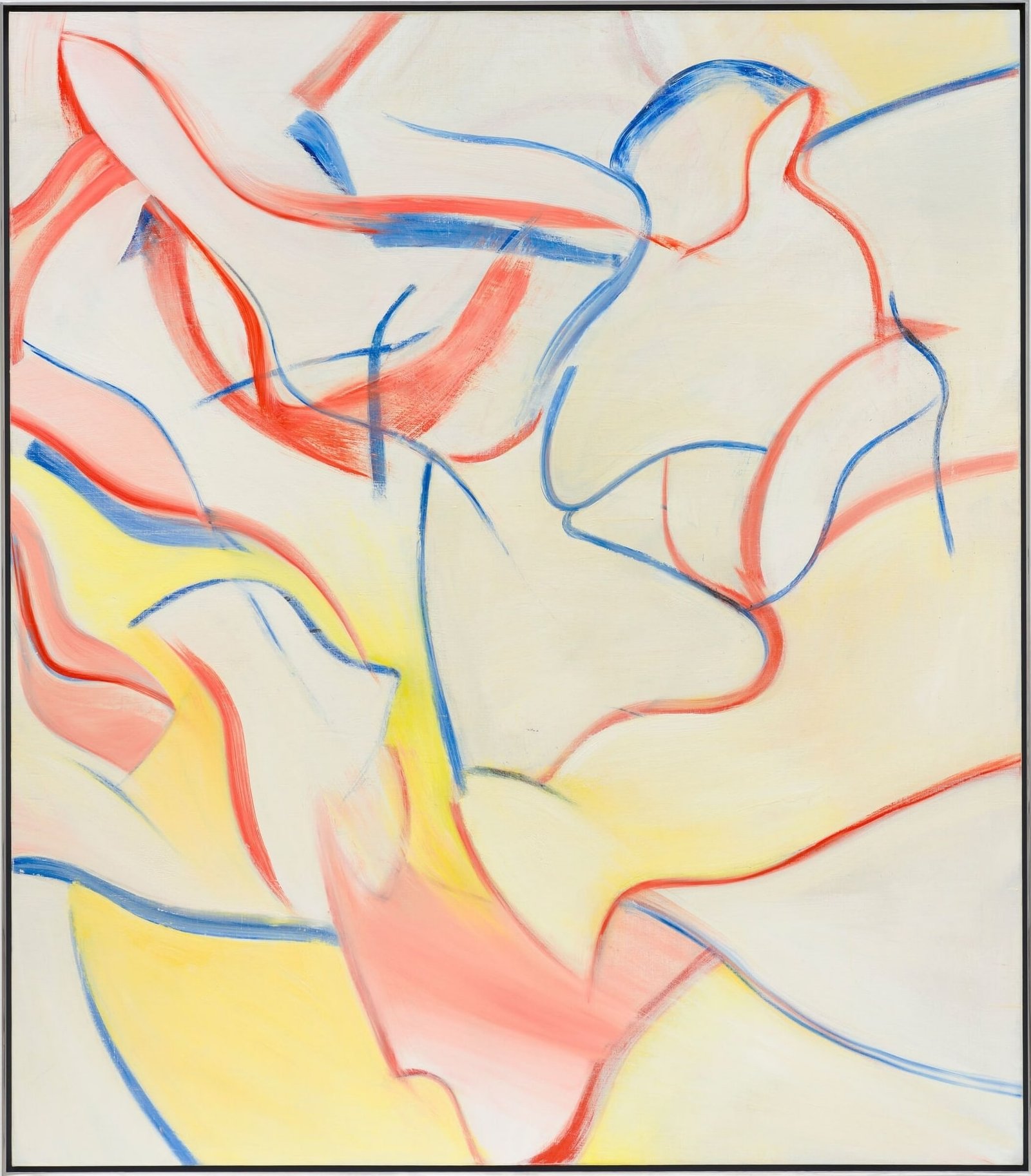
Willem de Kooning, Untitled IX, 1984
Willem de Kooning
Untitled IX, 1984
Oil on canvas | 81 3/8” x 71 1/4”
Ask about this work

Willem de Kooning (1904–1997) was a first-generation member of the New York School, a group of American artists who rose to prominence in the mid- to late 1940s and were noted for their dynamic, “allover” approach to abstract painting. Over a career that spanned seven decades, de Kooning’s singular contributions to abstraction and figuration set him apart from his peers, and his influence drastically shifted the direction of postwar American painting. "Untitled IX" (1984) belongs to the artist's late style paintings, the era of biggest change in his practice. In these works, de Kooning's rich and tactile painterly quality is reduced to narrow bands of prismatic colors that seem to buckle and turn in space.

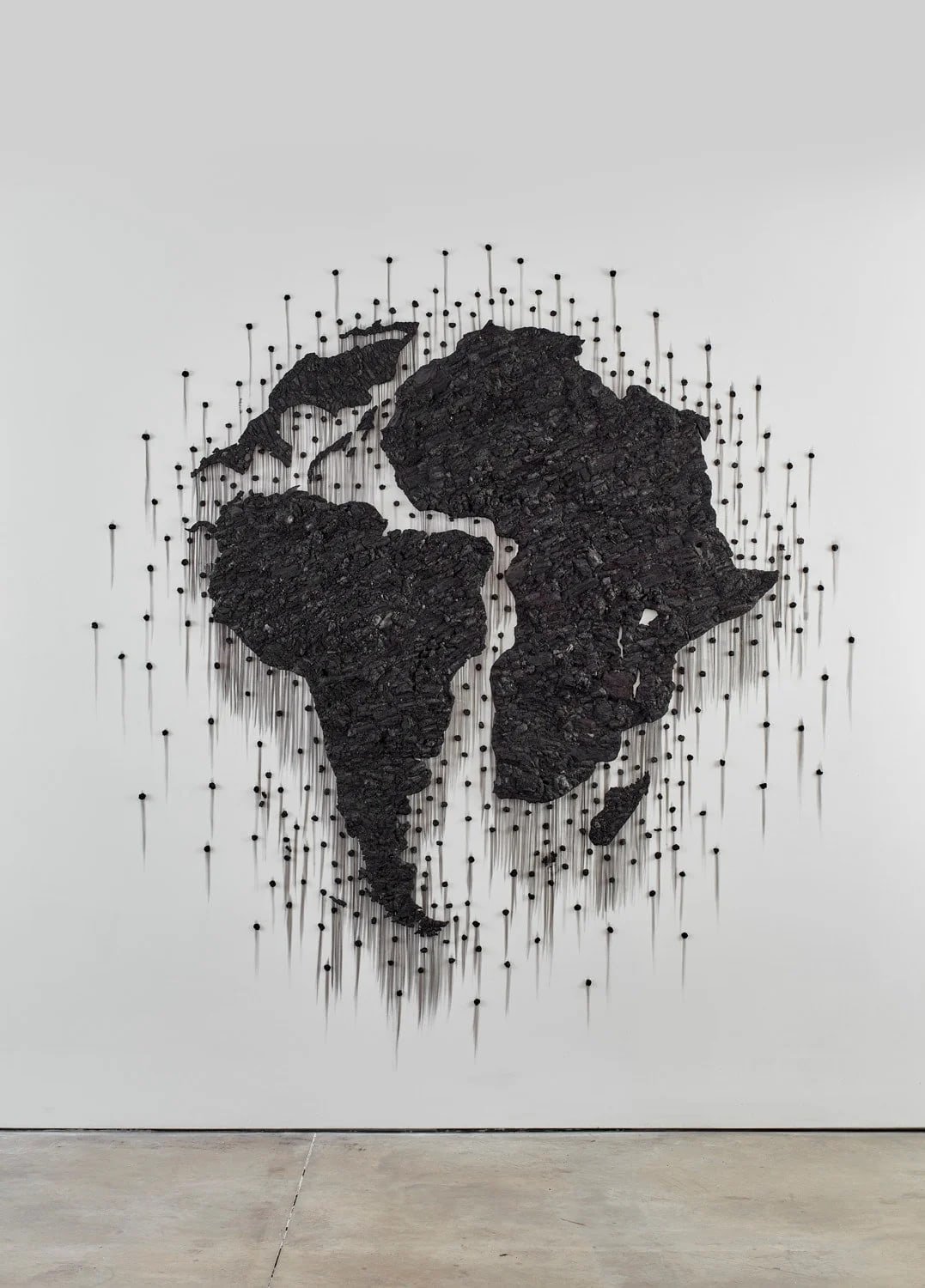
Teresita Fernández, Twins (Mirror Image) 2, 2019
Teresita Fernández
Twins (Mirror Image) 2, 2019
Charcoal | 105" diameter
Ask about this work

Teresita Fernández’s (b. 1968, Florida) work is characterized by an expansive rethinking of what constitutes landscape: from the subterranean to the cosmic, from national borders, to the more elusive psychic landscapes we carry within. "Twins (Mirror Image) 2" (2019) is a wall sculpture depicting a reimagined map that visualizes the interconnected geological, cultural, and historical relationships between the Caribbean, South America and Africa by portraying them nested next to one another. Made from dimensional solid charcoal, this artwork references the geological assertion that the now distinct forms were once part of a single unified landmass. Charcoal–itself made from burned trees that is already part of a real landscape–emphasizes the artist’s interest in uncovering what she refers to as “stacked landscapes,” which is the conceptual framework that reveals the often invisible, buried layers of relational histories.

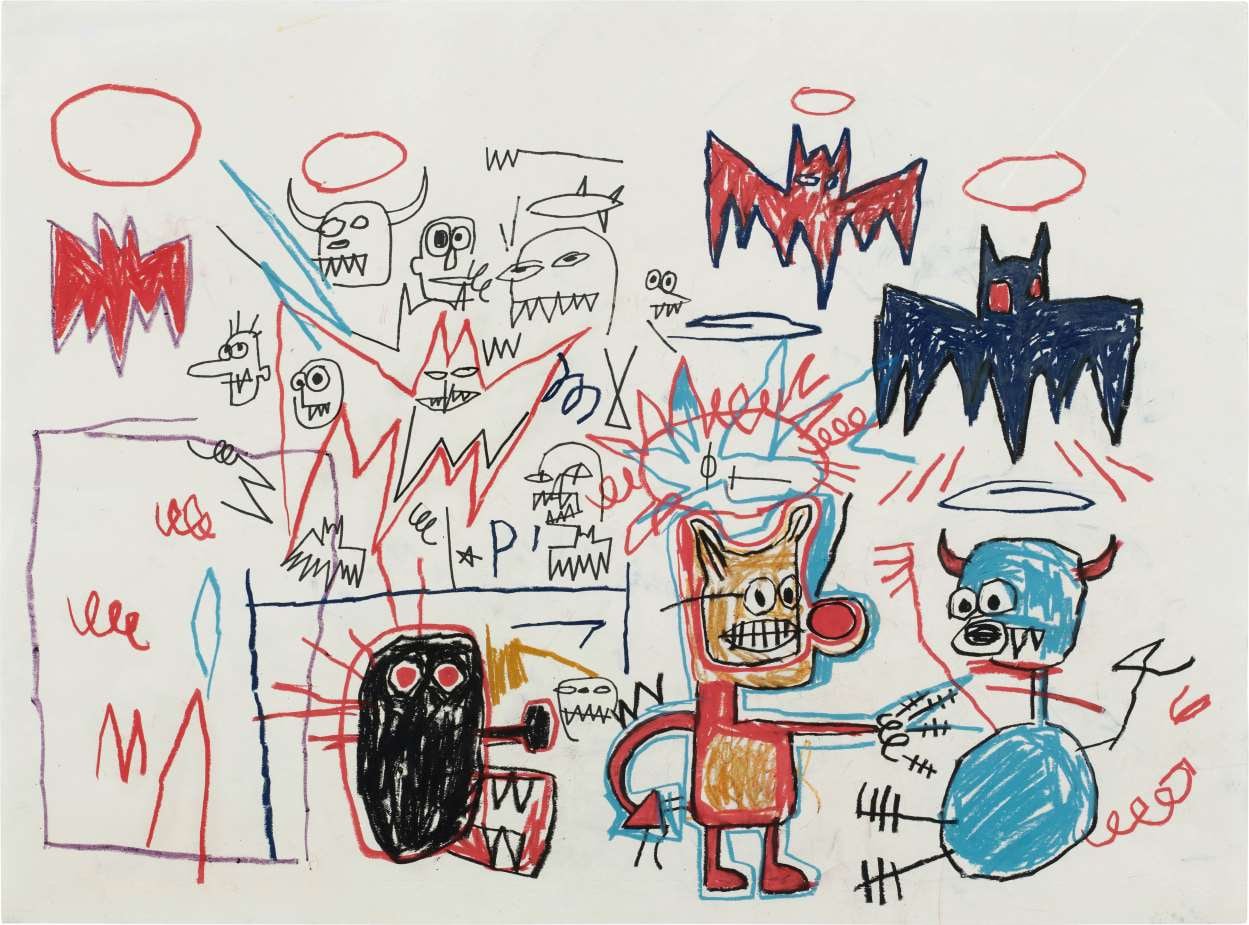
Jean-Michel Basquiat, Batman, 1983
Jean-Michel Basquiat
Batman, 1983
Oilstick on paper | 22” x 29 7/8”
Ask about this work

Jean-Michel Basquiat (1960–1988) was an influential American Neo-Expressionist painter and street artist known for blending text, symbols, and unrestrained figuration. "Batman" (1983) is an oilstick drawing on paper that exemplifies Basquiat’s engagement with popular culture and cartoon imagery, which he rendered with a rawness and immediacy distinct from the more polished aesthetic of the Pop Art movement. His execution is akin to stream of consciousness with quick fire gestures distilling figures into their flattened, essential forms. An avid admirer of cartoons and comic books, Basquiat recognized their ability to reflect the deeper issues he often grappled with in his art such as racism, discrimination, and erroneous representations of good and evil. Adorning bat-insignias and horned devils alike with haloes, Basquiat crystallizes these investigations in the present work.

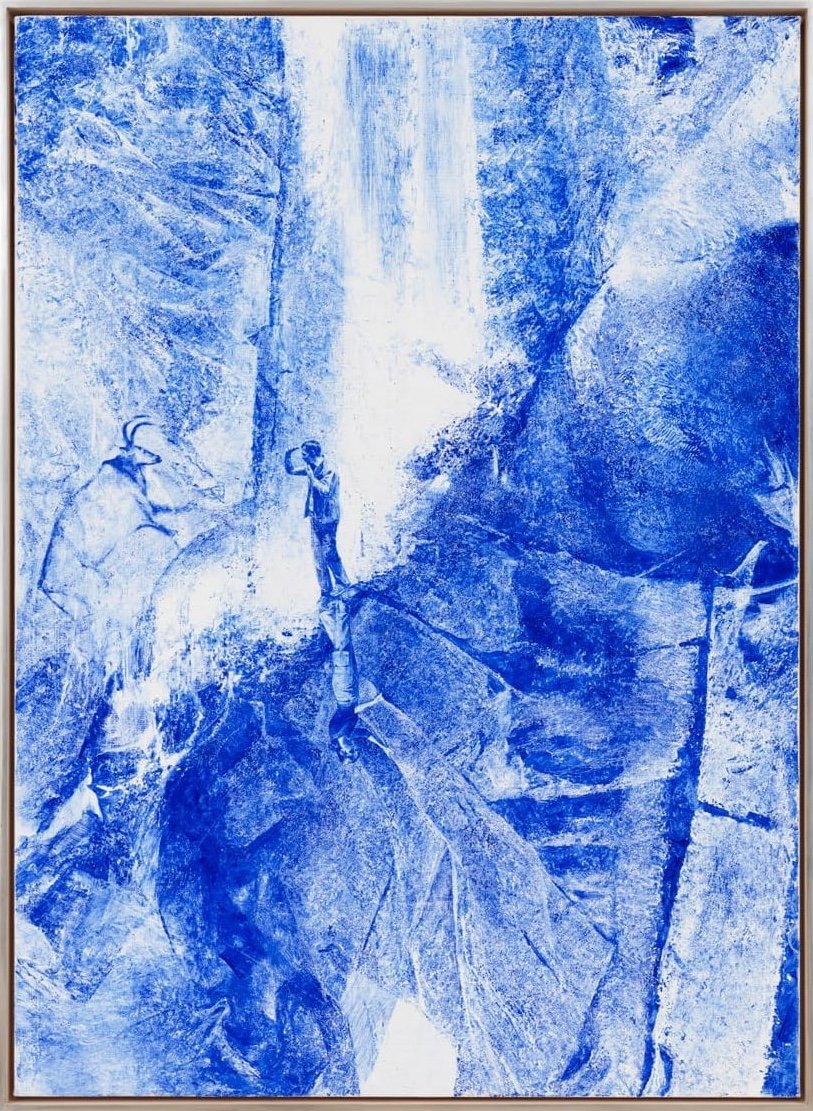
Mark Tansey, Sunstruck (Study for About), 2022
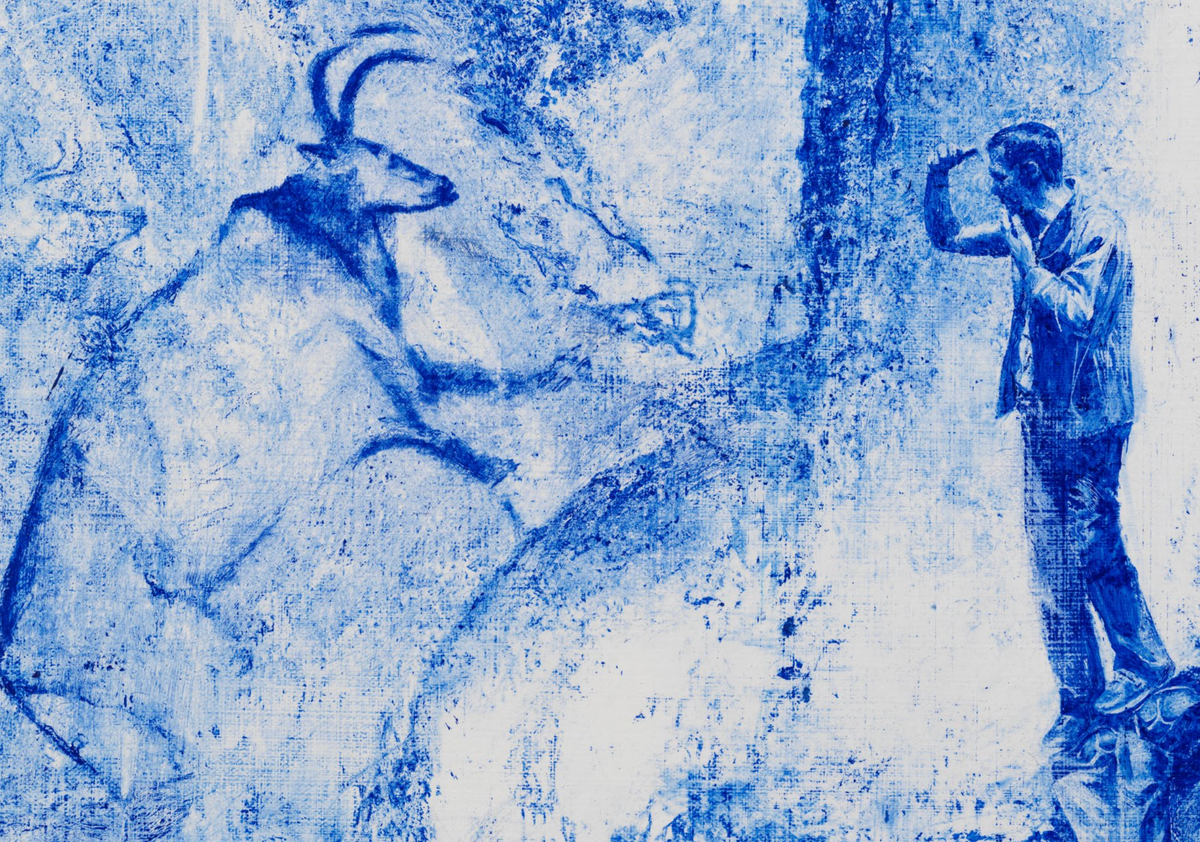
Detail of Mark Tansey, Sunstruck (Study for About), 2022

Detail of Mark Tansey, Sunstruck (Study for About), 2022

Mark Tansey
Sunstruck (Study for About), 2022
Oil on canvas | 44" x 32"
Ask about this work

Each of Mark Tansey’s (b. 1949, California) paintings is a visual adventure that explores the nature of perception, meaning, and subjectivity. Working with the traditions of figurative and landscape painting, Tansey incorporates his expansive knowledge of history in layers of literary, philosophical, and mathematical references. “Sunstruck (Study for About)” (2022) brings together two recurring themes in Tansey’s work: mountains and caves, particularly Plato’s Allegory of the Cave, and the figure of the blinded, sunstruck philosopher. Painted in Tansey’s signature monochromatic blue, the work originated from one of his crumpled-paper drawings, which served as a prompt for translating its textured, topographical surface into a landscape. The resulting image evokes a craggy rock face, cascading water, the interior of a cave, and trees reminiscent of Yosemite National Park, a place Tansey loved visiting as a child. While looking at "Sunstruck", Tansey said, “the viewer might become aware that the process of painting, being textural, the scratching and scraping of highlights, the adding of darks and subtracting of lights, is basically finger painting in the cave painting tradition.”

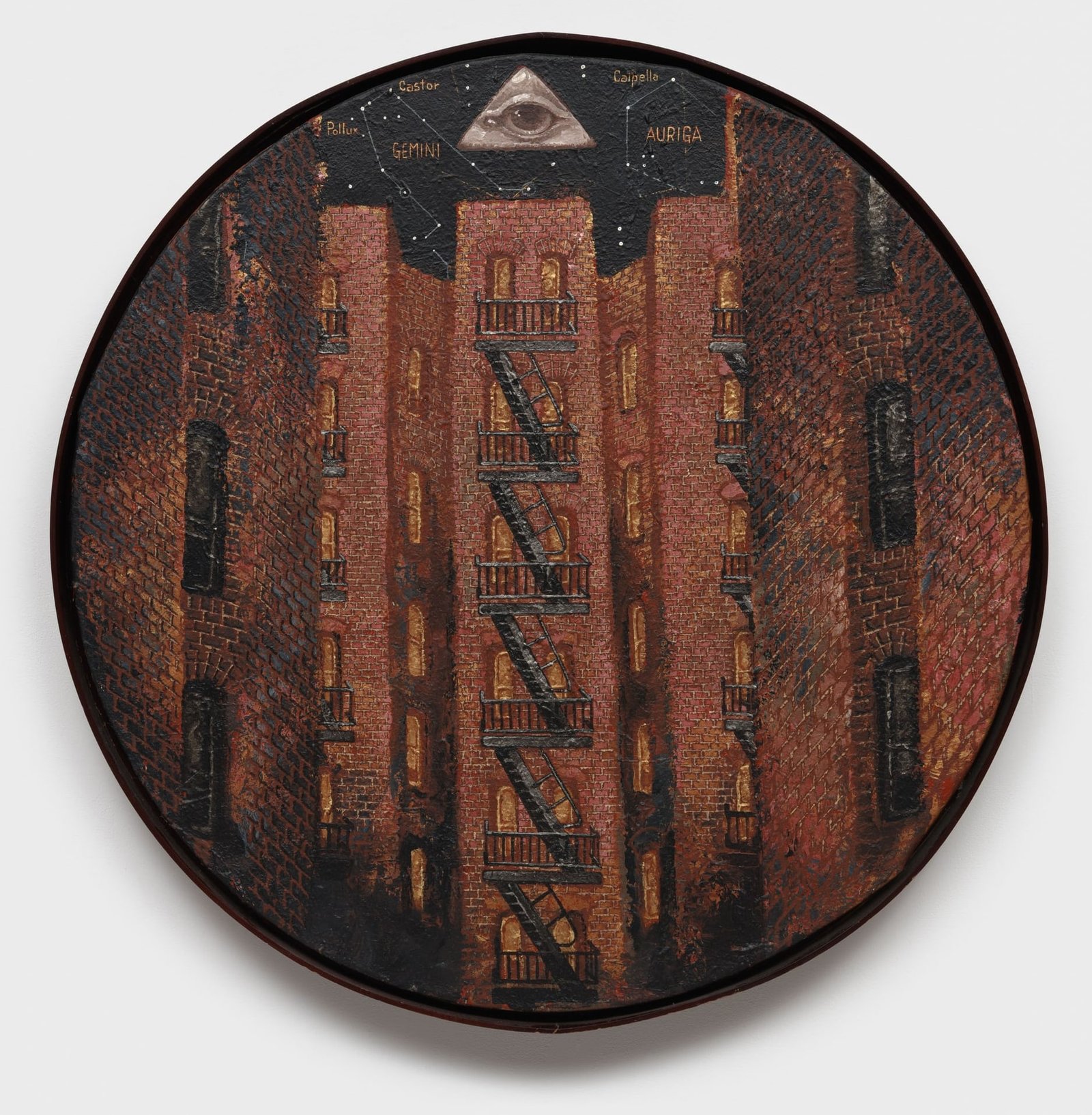
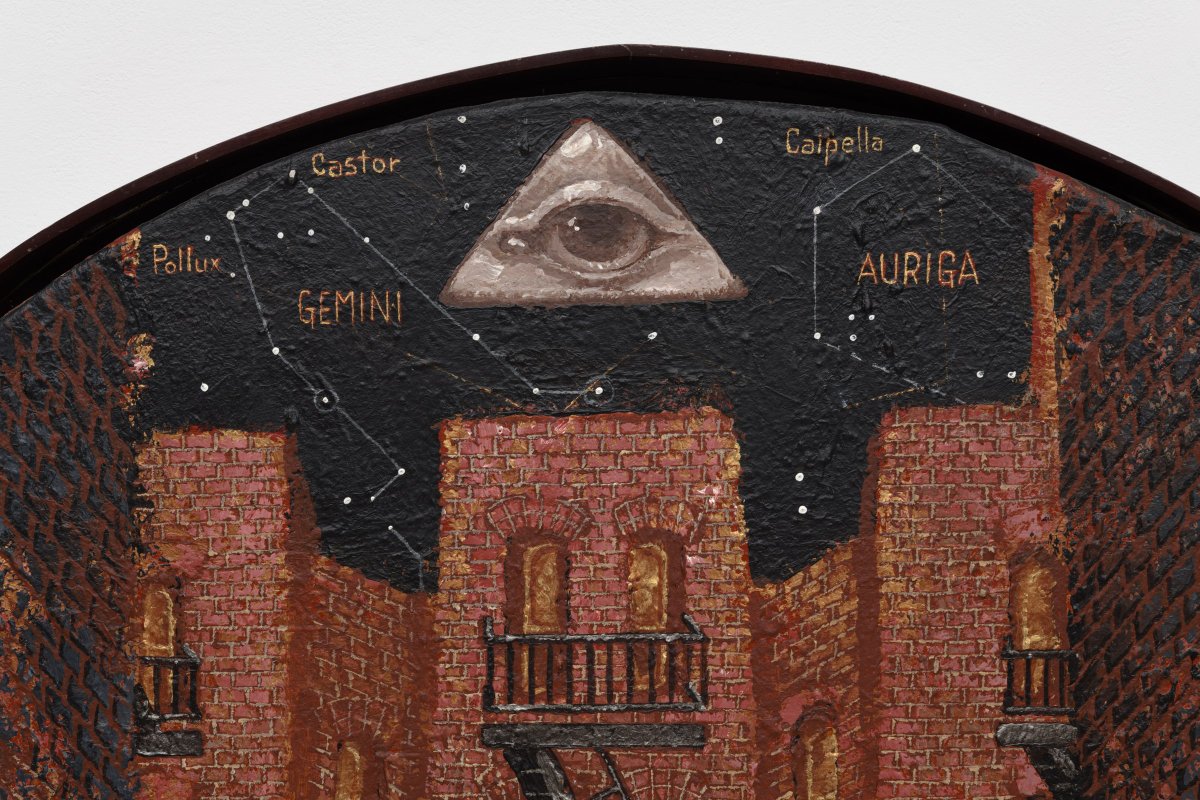
Martin Wong, I.C.U., 1988
Detail of Martin Wong, I.C.U., 1988

Detail of Martin Wong, I.C.U. 1988

Martin Wong
I.C.U., 1988
Acrylic on canvas | 40" diameter
Ask about this work

Martin Wong (1946–1999) was a fixture of New York's East Village art scene in the 1980s. He captured the urban environment with a sense of magic, celebrating the diversity and boundless possibilities of New York City while also acknowledging its capacity for isolation. "I.C.U." (1988) features Wong's iconic, intricately-rendered bricks that dominate the canvas with a lifelike presence. Here, the towering tenement buildings, zigzagging fire escapes, and repetitive windows take on a haunting quality, their emptiness amplified by the painting's imposing, double-entendre title. At the top of the canvas, a sliver of sky is dotted with constellations and features the all-seeing Eye of Providence, reflecting Wong’s fascination with astronomy and celestial imagery.

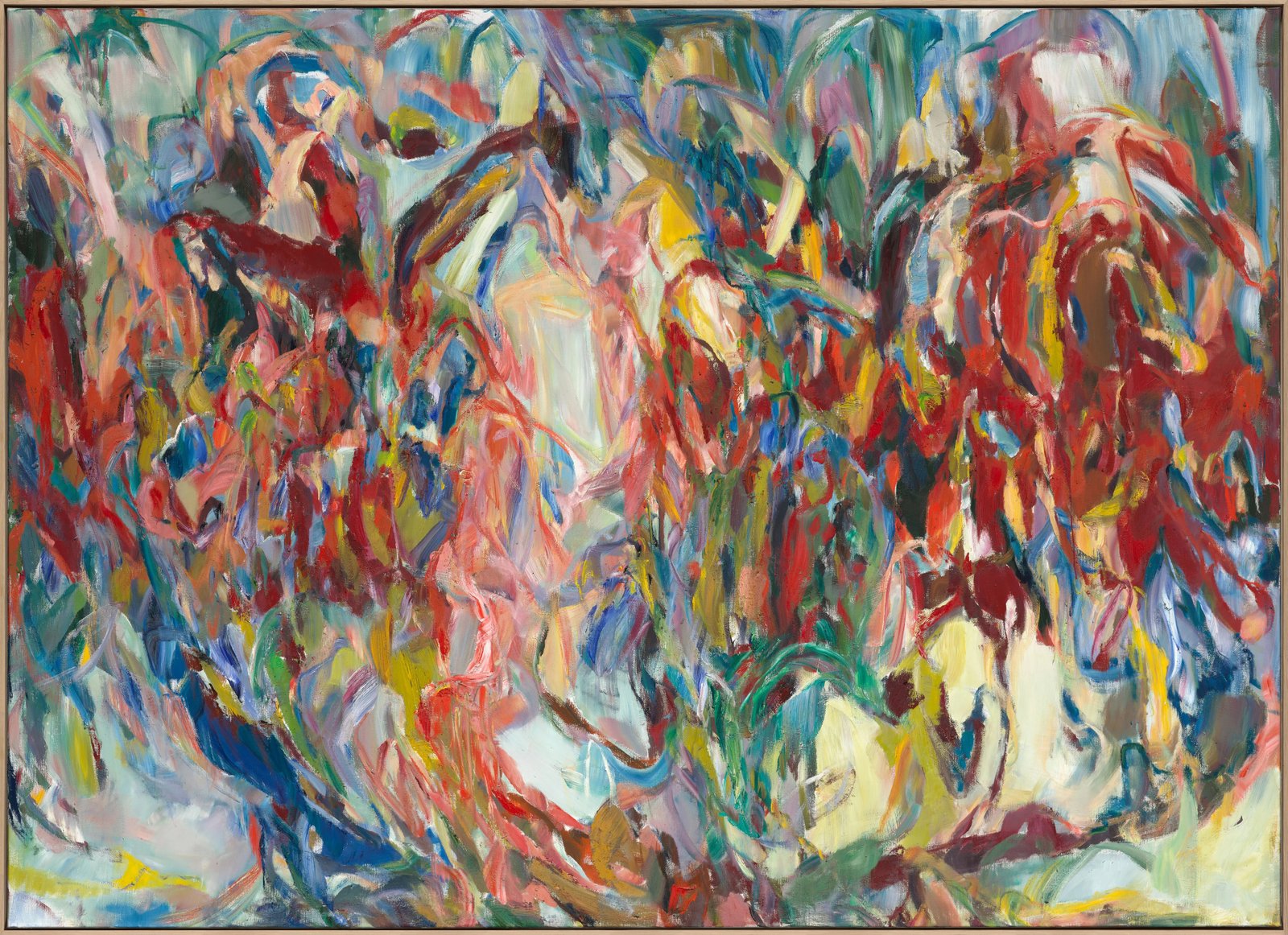
Sabine Moritz, Penthesilea's Morning, 2026
Sabine Moritz
Penthesilea's Morning, 2026
Oil on canvas | 70 7/8” x 98 3/8”
Ask about this work

Sabine Moritz’s (b. 1969, Germany) paintings appear timeless yet endlessly shifting, each a suspended moment that explores the complex workings of memory and emotion. By situating observations of her immediate surroundings alongside deconstructed and de-historicized documentary images, and adapting and repurposing a catalogue of symbolic motifs, Moritz ponders the fragile constitution and mercurial dynamics of recollection. Both figurative and abstract, her works enhance our sensitivity to the passage of time, locating personal experience within shared narratives to examine ideas of transience and decay.

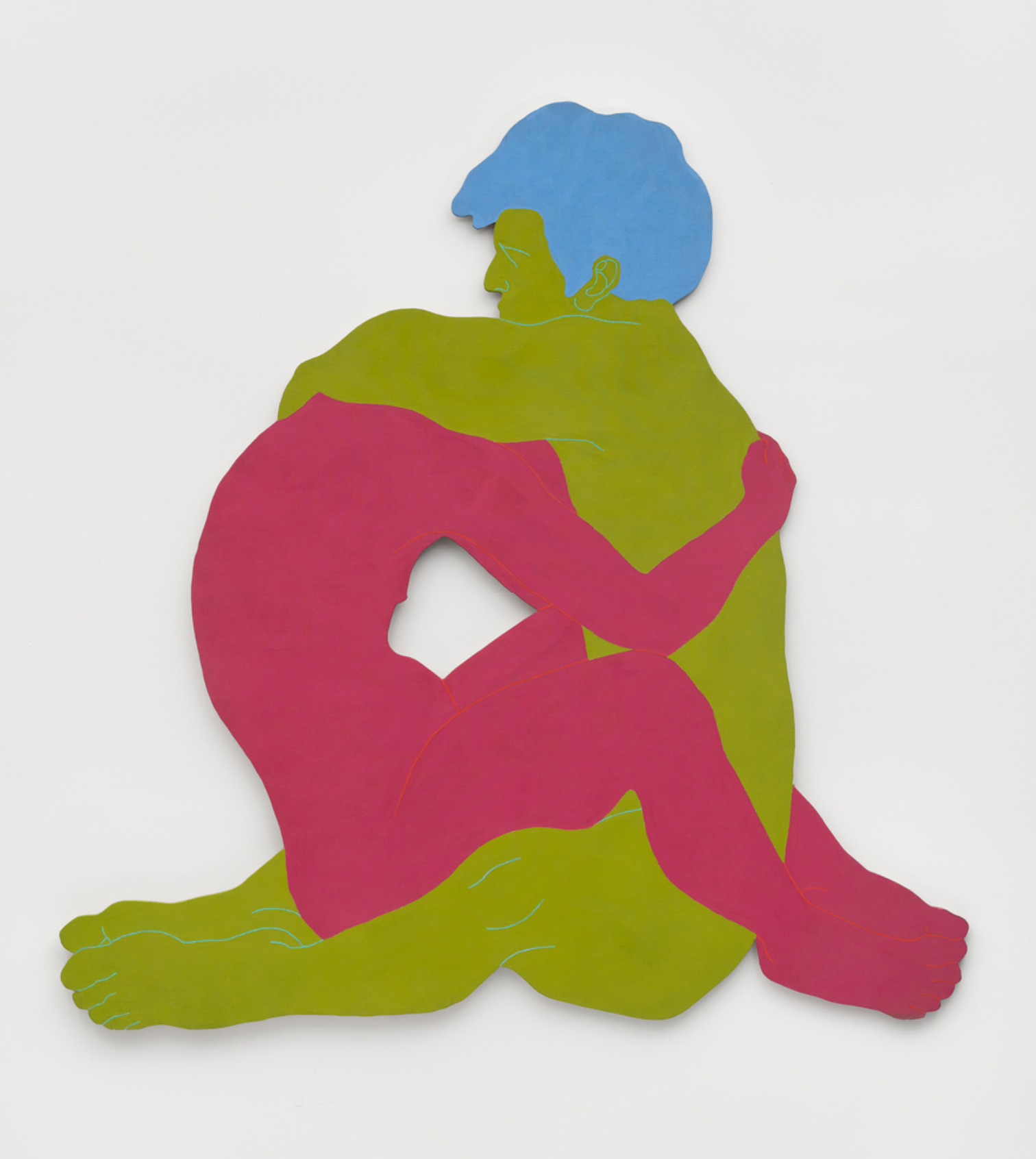
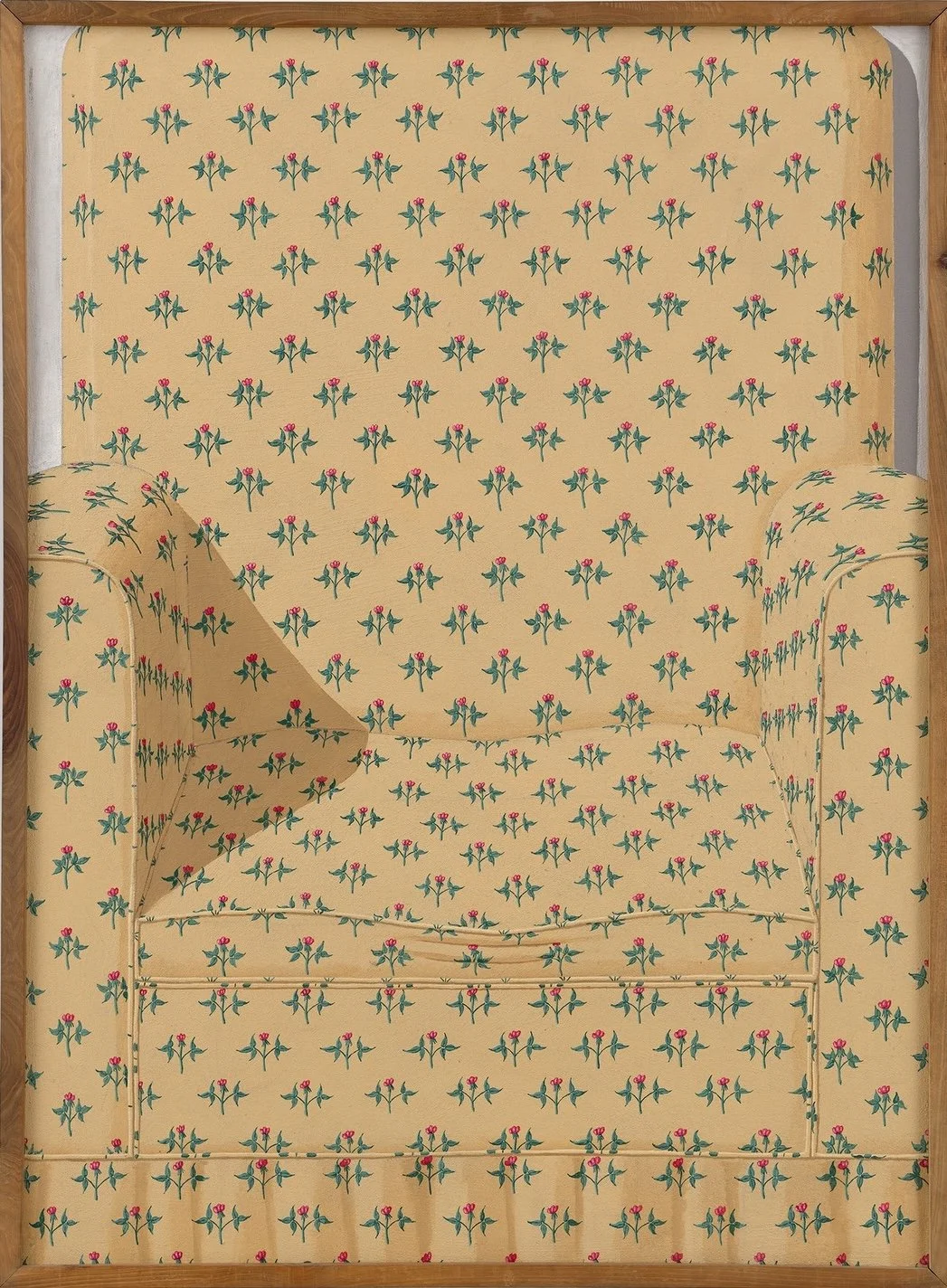
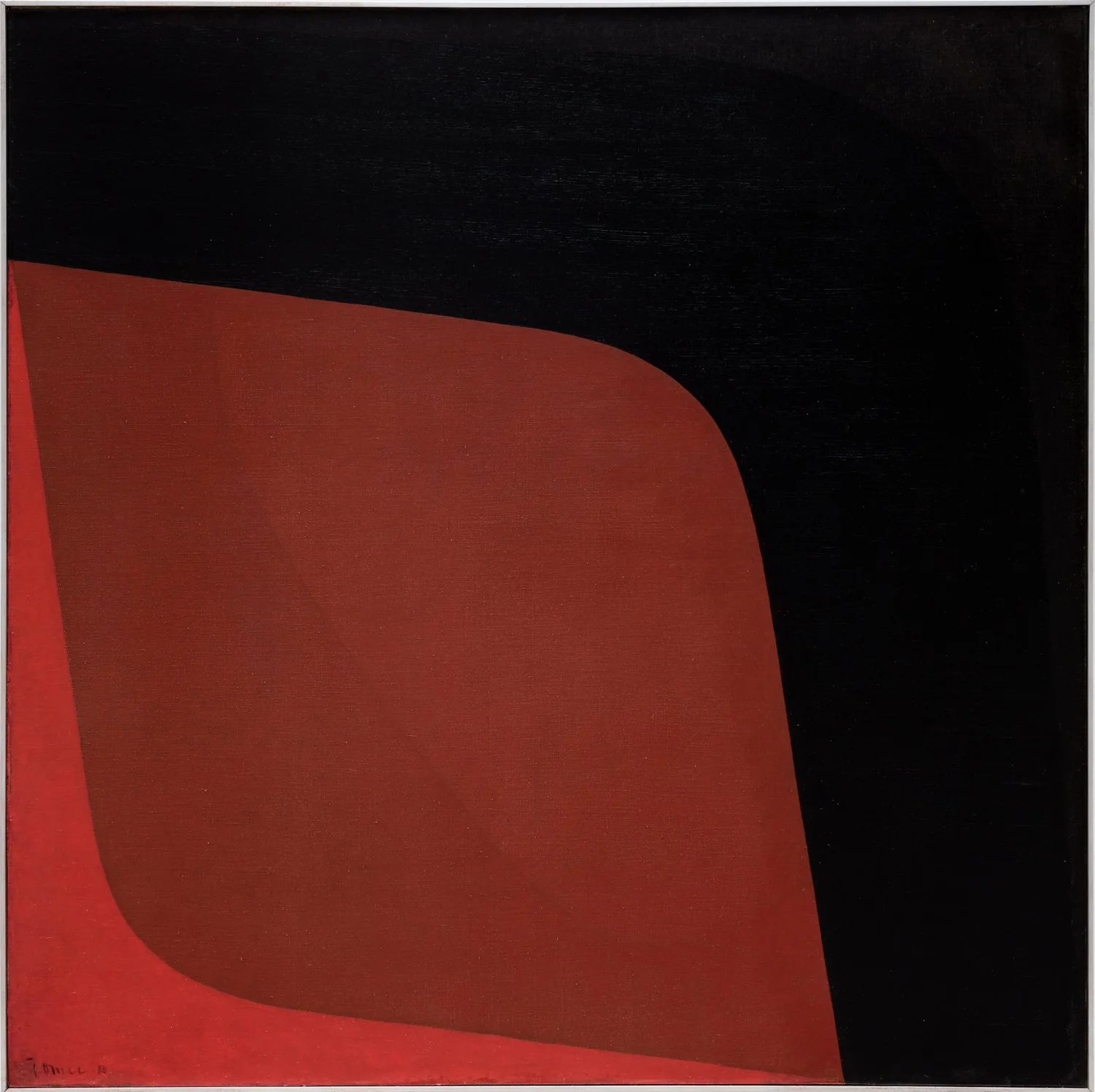
Carmen de Monteflores, Man and Woman Sitting, 1968
Carmen de Monteflores
Man and Woman Sitting, 1968
Acrylic on canvas | 84” x 83”
Ask about this work

Frustrated by the lack of opportunities for women in the art world, Carmen de Monteflores (b. 1933, Puerto Rico) stopped painting in 1969. This past year, her work from the 1960s was celebrated at the 2026 Whitney Biennale. The artist's shaped canvases combine fields of color with tangled, nude figures in a bold, graphic style. She started her process with observation and sketches of the landscape, her family, and other figures throughout her life. She then translated these into the large-scale works that distilled bodies to their basic shapes. Playing with color, negative space, and gesture, the paintings have a sculptural quality that sit at the intersection of Pop Art, Minimalism, and Feminist Art. On the tender and sensual quality of the paintings, Monteflores shared “I think it was my longing for sex after years of having kids. I think there was a longing for a fuller sexual life.”

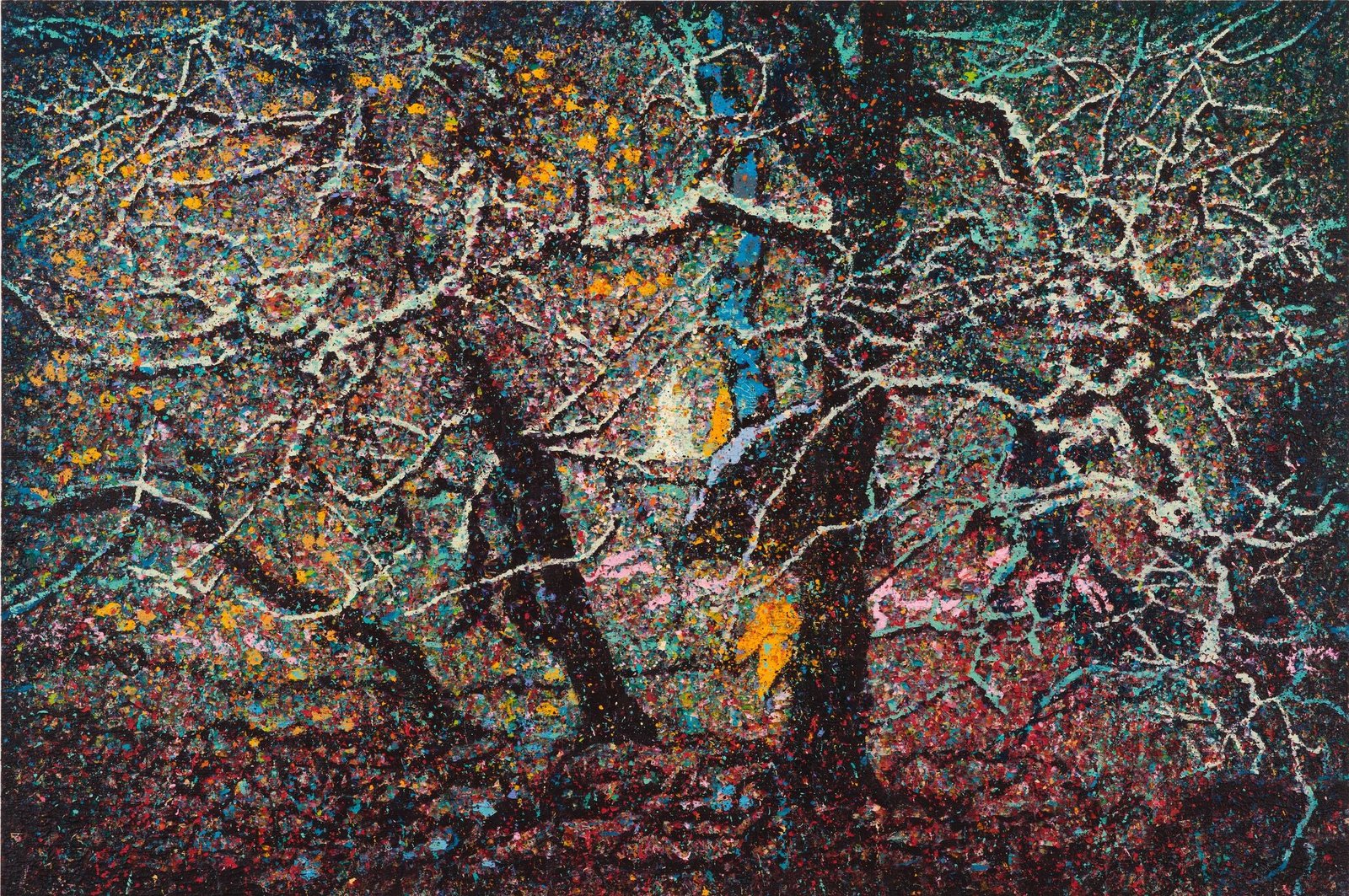
Zeng Fanzhi, Untitled, 2025
Detail of Zeng Fanzhi, Untitled, 2025

Detail of Zeng Fanzhi, Untitled, 2025

Zeng Fanzhi
Untitled, 2025
Oil on canvas | 70 7/8" x 106 1/4"
Ask about this work

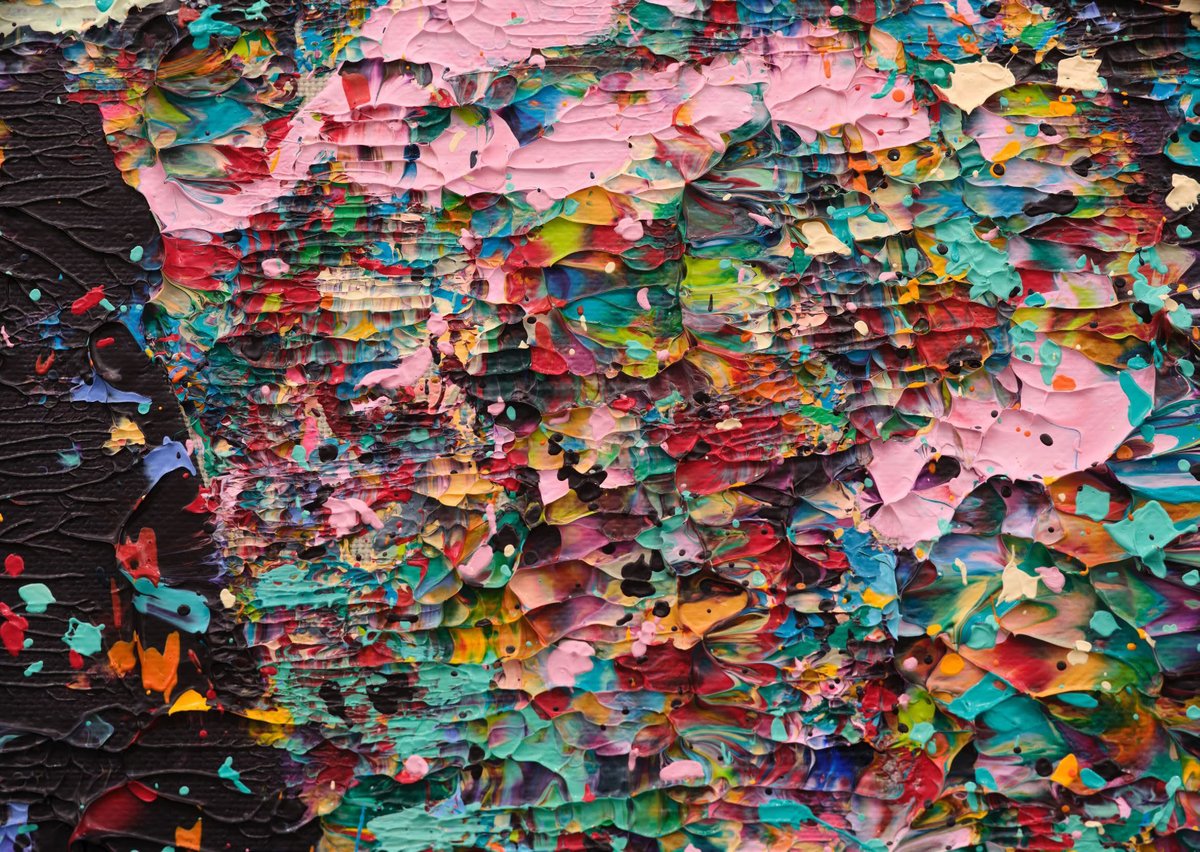
Zeng Fanzhi’s (b. 1964, China) visually and historically complex paintings reflect his bold experimentation with, and fusion of, Eastern and Western artistic traditions. During his youth Zeng was inspired by China’s ’85 New Wave movement, which saw artists search for a new, often more conceptual, language after the Cultural Revolution of the 1960s and 1970s. Zeng closely followed and studied Western art and was particularly drawn to German Expressionism and French Romanticism, through which he observed the ways in which his predecessors processed and visualized their experiences during times of extreme societal flux. “Untitled” (2025) belongs to a body of work that evolved from the artist’s presentation at the 2024 Venice Biennale. Emerging from his enduring fascination with the principles of color theory, the painting harnesses and transforms the meticulous rigor of Pointillism, the fragmented light of Impressionism, and the physicality of Abstract Expressionism, skillfully merging these techniques into a unified composition. Acting with both speed and precision, the artist applies wet-on-wet paint to interweave a breathtaking plethora of pigments.

Chiharu Shiota, Endless Line, 2024
Chiharu Shiota
Endless Line, 2024
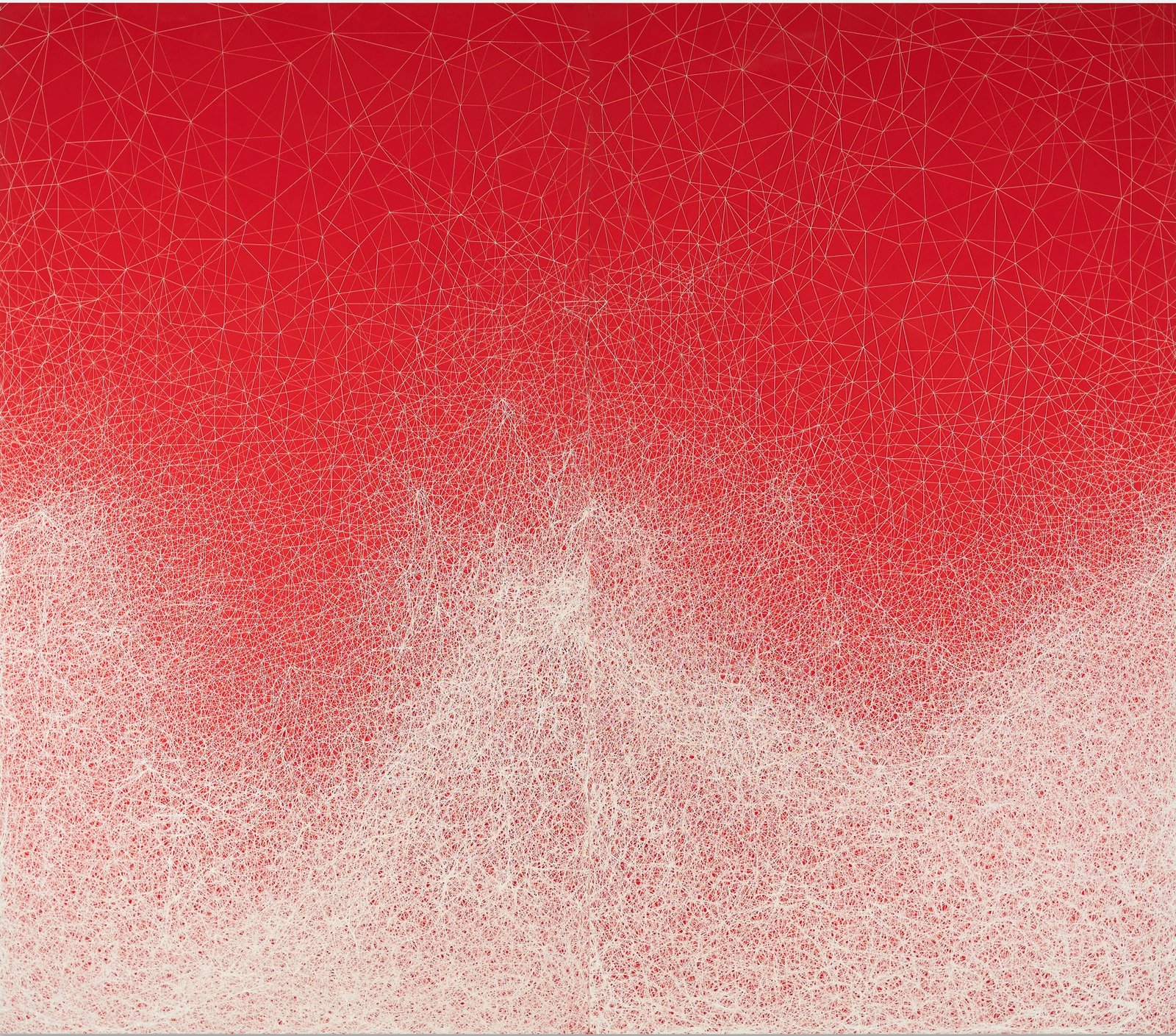
Thread on canvas | 55" x 63"
Ask about this work

Working primarily with woven yarn, Chiharu Shiota (b. 1972, Japan) brings together performance, body art, and installation in a practice centered on the human body. She is renowned for her site-specific installations, which envelop spaces in intricate architectures of red threads, inviting viewers to move through and engage with these immersive environments. Often incorporating objects imbued with memory—window frames, discarded musical instruments, suitcases, ephemera, keys, books, and second-hand garments—her monumental installations form a distinctive body of work exploring existence, memory, and transcendence. Shiota translates this spatial language onto canvas in her "Infinite Lines" series, transforming the intricate web of threads into a two-dimensional surface.

Kiki Smith, Mid Morning, 2024
Detail of Kiki Smith, Mid Morning, 2024

Detail of Kiki Smith, Mid Morning, 2024

Kiki Smith
Mid Morning, 2024
Bronze with gold and Japanese silver leaf, 46 elements | Dimensions variable
Ask about this work

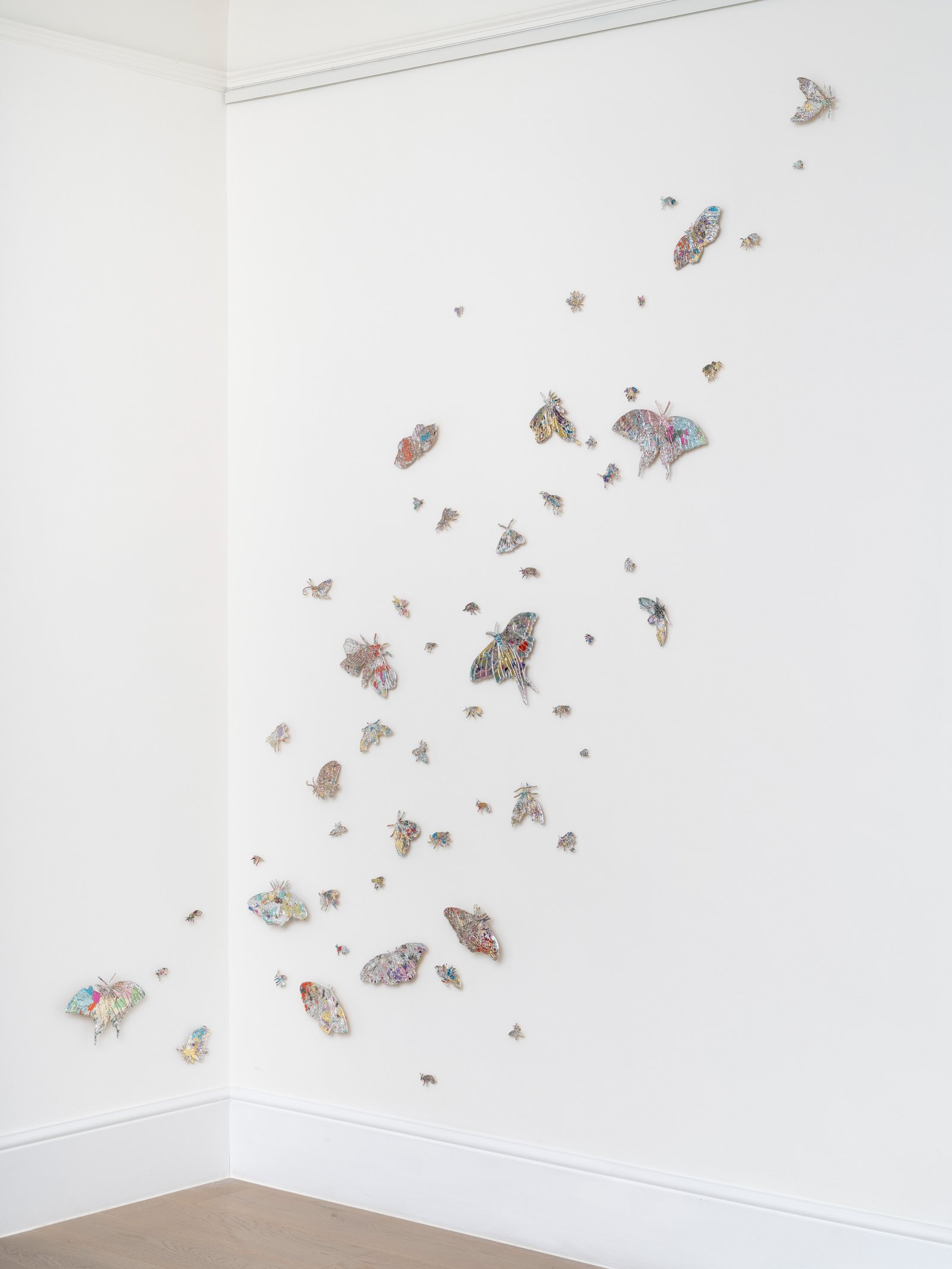
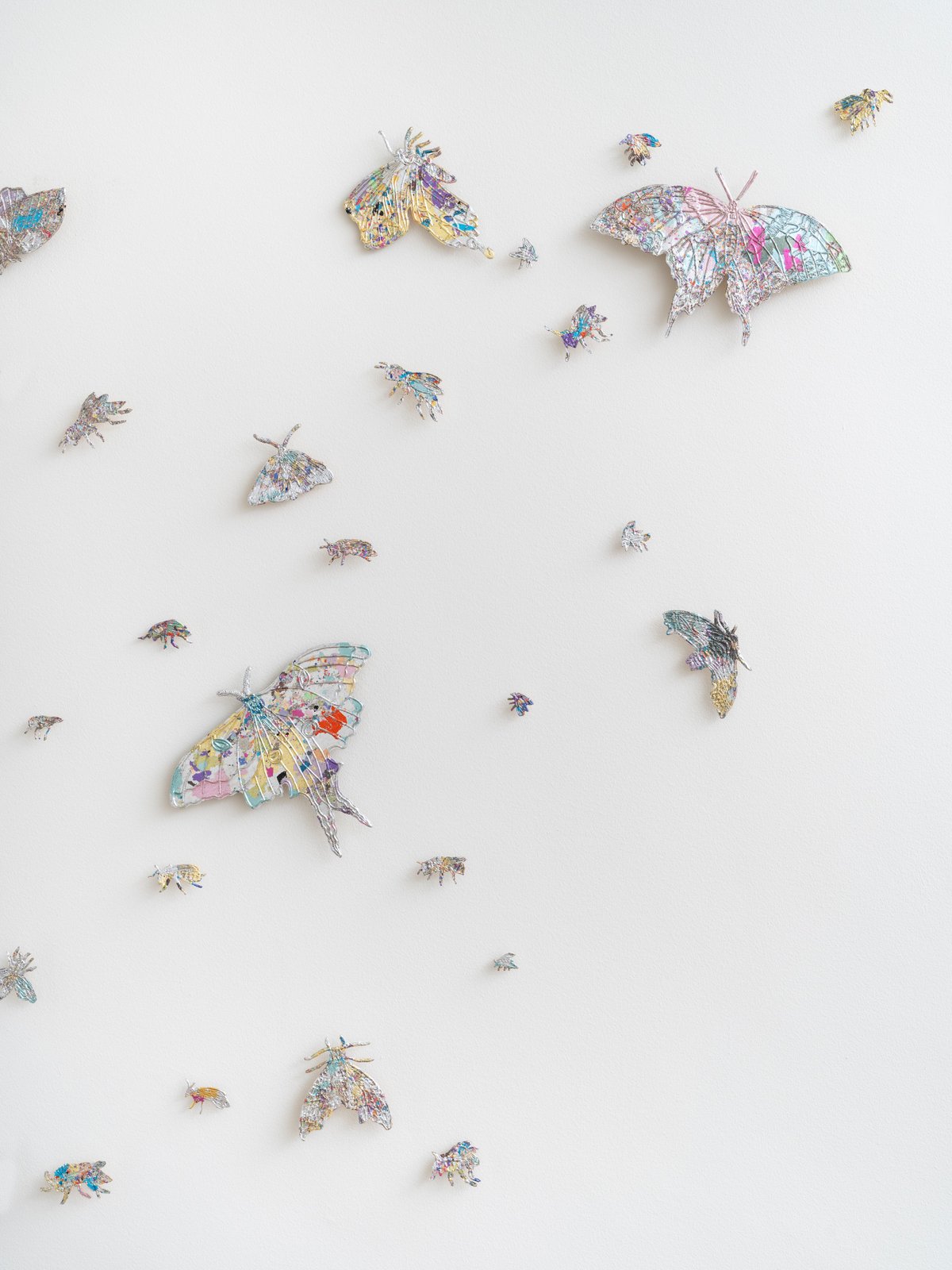
Since the 1980s, Kiki Smith (b. 1954, Germany) has explored embodiment and the natural world. She uses a broad variety of materials to continuously expand and evolve a body of work that includes sculpture, printmaking, photography, drawing, and textiles. Drawing from folklore, biblical stories, and ancient mythologies, her works consider the ways in which we situate ourselves in our environment, among each other and the many forces of nature. “Mid Morning” (2024) is an example of Smith’s wall installations, featuring a delicate swarm of butterflies and insects speckled with vibrant colors, gold, and silver leaf. Arranged across the wall, the shimmering creatures bring movement, texture, and a sense of wonder to architectural spaces.

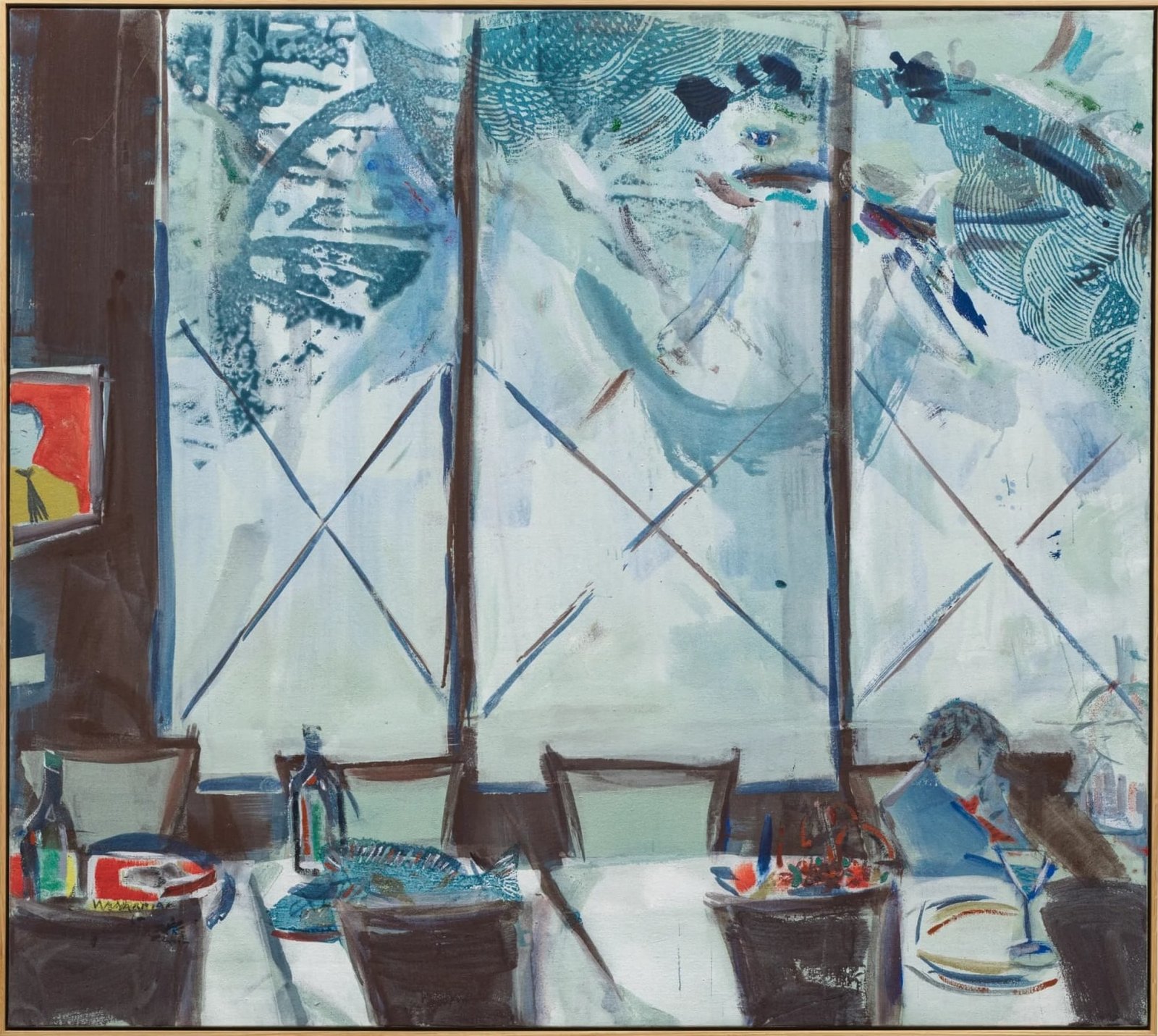
Nick Goss, A Table in the Corner, 2026
Nick Goss
A Table in the Corner, 2026
Distemper, silkscreen, and oil on linen | 64 1/2" x 72 1/4"
Ask about this work

Nick Goss (b. 1981, United Kingdom) layers personal and collective history in his figurative painting. Building the compositions slowly through thin layers of often muted pigment over screen-printed images, the scenes shift between abstraction and realism. The spaces Goss depicts feel real and nostalgic, yet also have a wash of dreamlike strangeness. Goss finds inspiration in the places he inhabits, but also intends to create space for the viewer to approach the work with their own memories and ideas. On his work, the artist shared "I’m looking to paint an image that is not concerned with any type of certainty, but situates itself in the elusive interim zone between what is actually there in front of you and what is remembered."

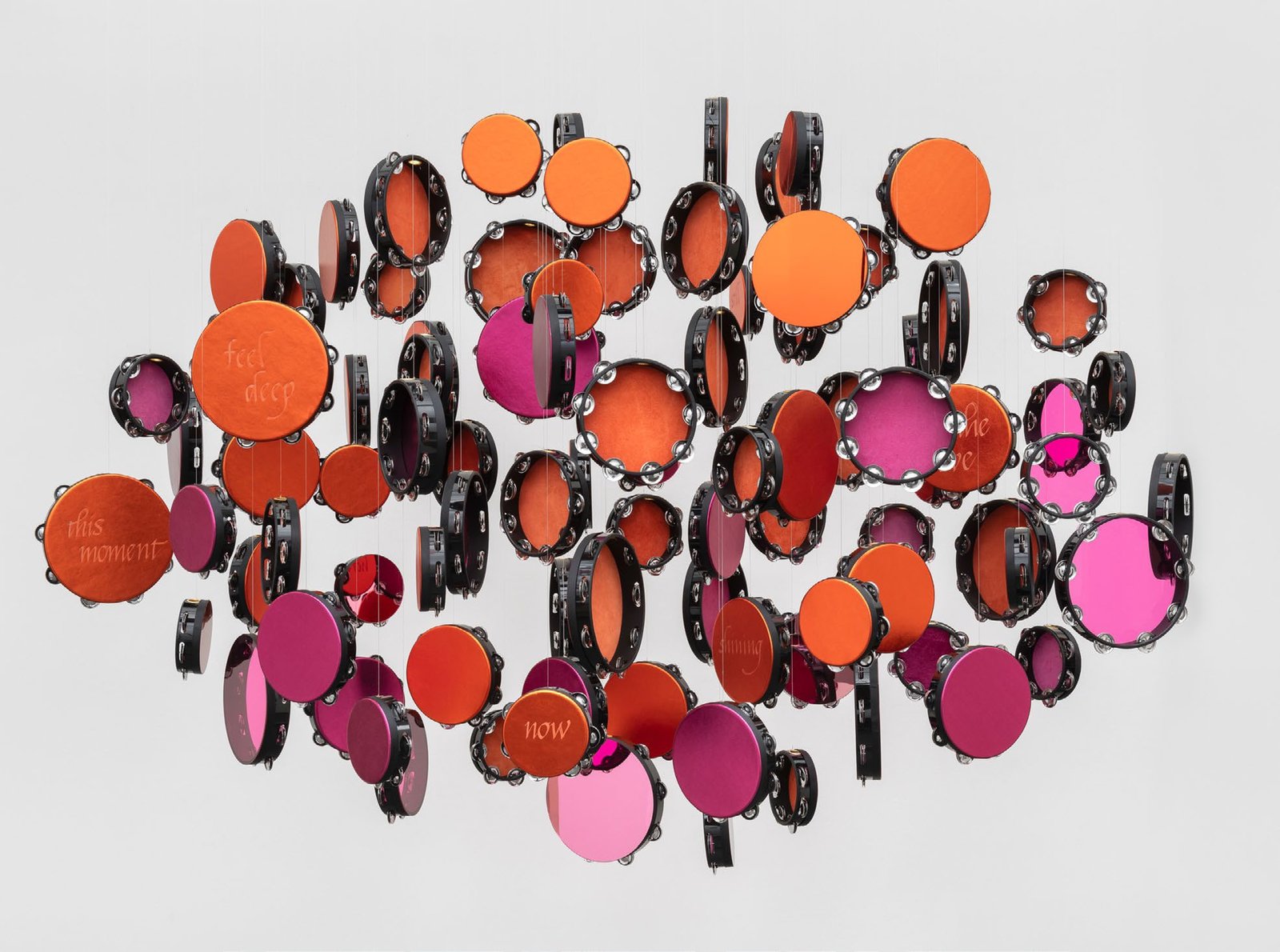
Lava Thomas, Golden Time of Day, 2026
Lava Thomas
Golden Time of Day, 2026
Tambourines, pyrographic calligraphy, leather, plexiglass, mirrored acrylic, ribbon, braided wire, S-hooks, and steel grid | 60” x 94” x 46”
Ask about this work

Lava Thomas (b. 1958, California) shapes public memory through large-scale drawings, portraiture, monuments, and site-specific installations. Engaging civic, family, and historical archives, her work gives renewed presence to lives and narratives that inform the American story. “Golden Time of Day" (2026) belongs to the artist’s ongoing “Freedom Songs” series, a body of tambourine works that honor the sacrifice, dedication, and labor of civil rights activists whose struggle for equality and justice remains relevant and urgent today. The series recalls civil rights era protest songs in the African American music tradition–from spirituals, gospel and R&B. Freedom songs were sung to inspire courage during meetings, marches, and when activists were arrested during acts of protest against Jim Crow segregation, subjugation, and terrorism. “Golden Time of Day” (2026) references Maze featuring Frankie Beverly’s 1978 hit of the same name.

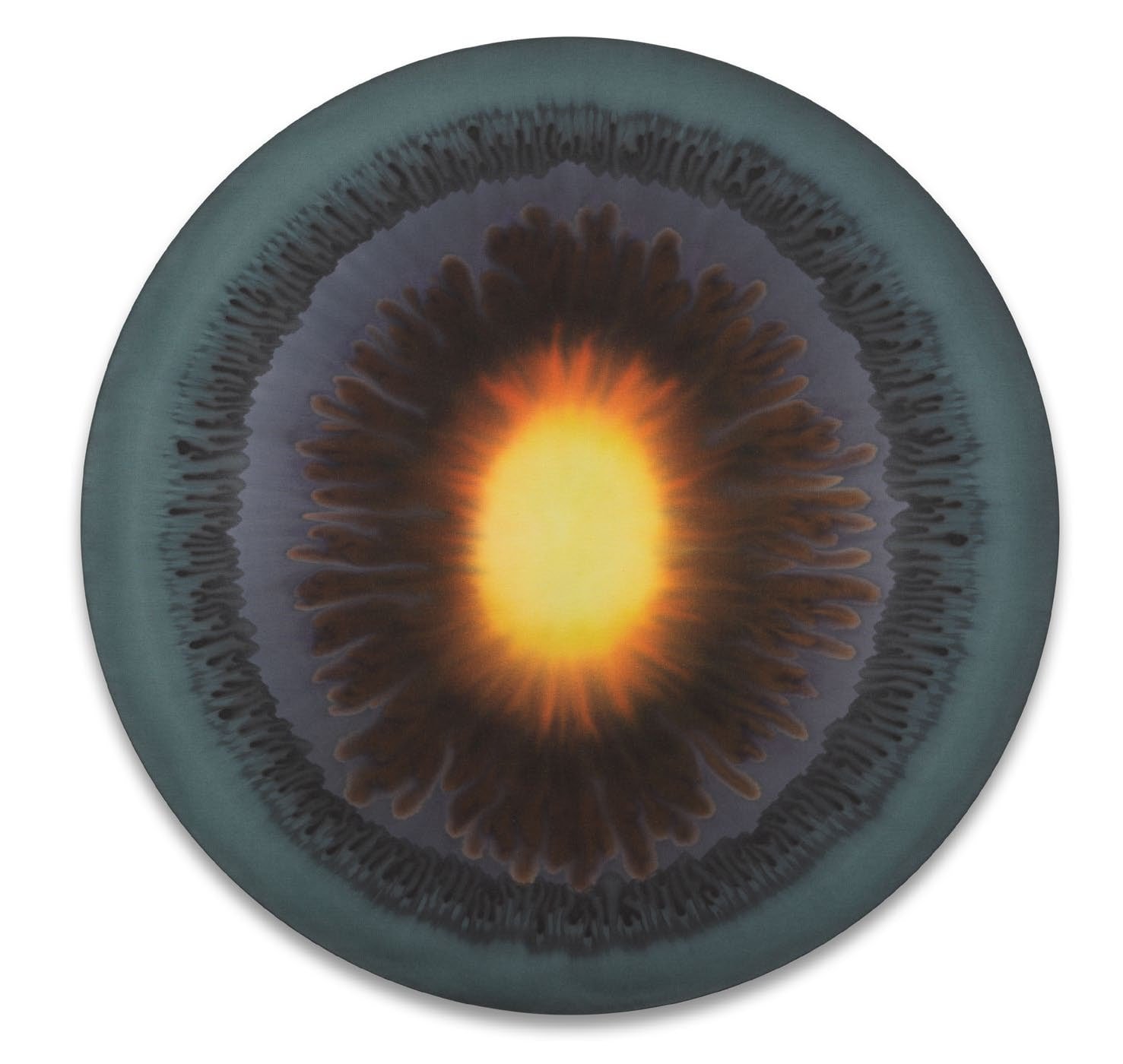
Olafur Eliasson, Beckoning beyond beliefs, 2026
Olafur Eliasson
Beckoning beyond beliefs, 2026
Alcohol ink on canvas | 45 1/4” diameter
Ask about this work

Olafur Eliasson is an Icelandic-Danish artist (b.1967, Denmark) with a diverse, research-driven practice spanning sculptures, installations, paintings, films, and photography. His art prompts the viewer to have a greater sense of awareness about the ways we engage and interpret the world. "Beckoning beyond beliefs" (2026) belongs to his series of ink on canvas paintings. The tondo is created with Eliasson’s careful manipulation of ink, which he dilutes with isopropyl alcohol before pouring and layering colors, allowing them to spread and bleed into one another. He gently intervenes in the process, using a dryer, heat lamp, or fan to subtly direct or restrain the flow. The resulting abstract compositions are beautiful and atmospheric, evoking the effect of a photographic lens flare.

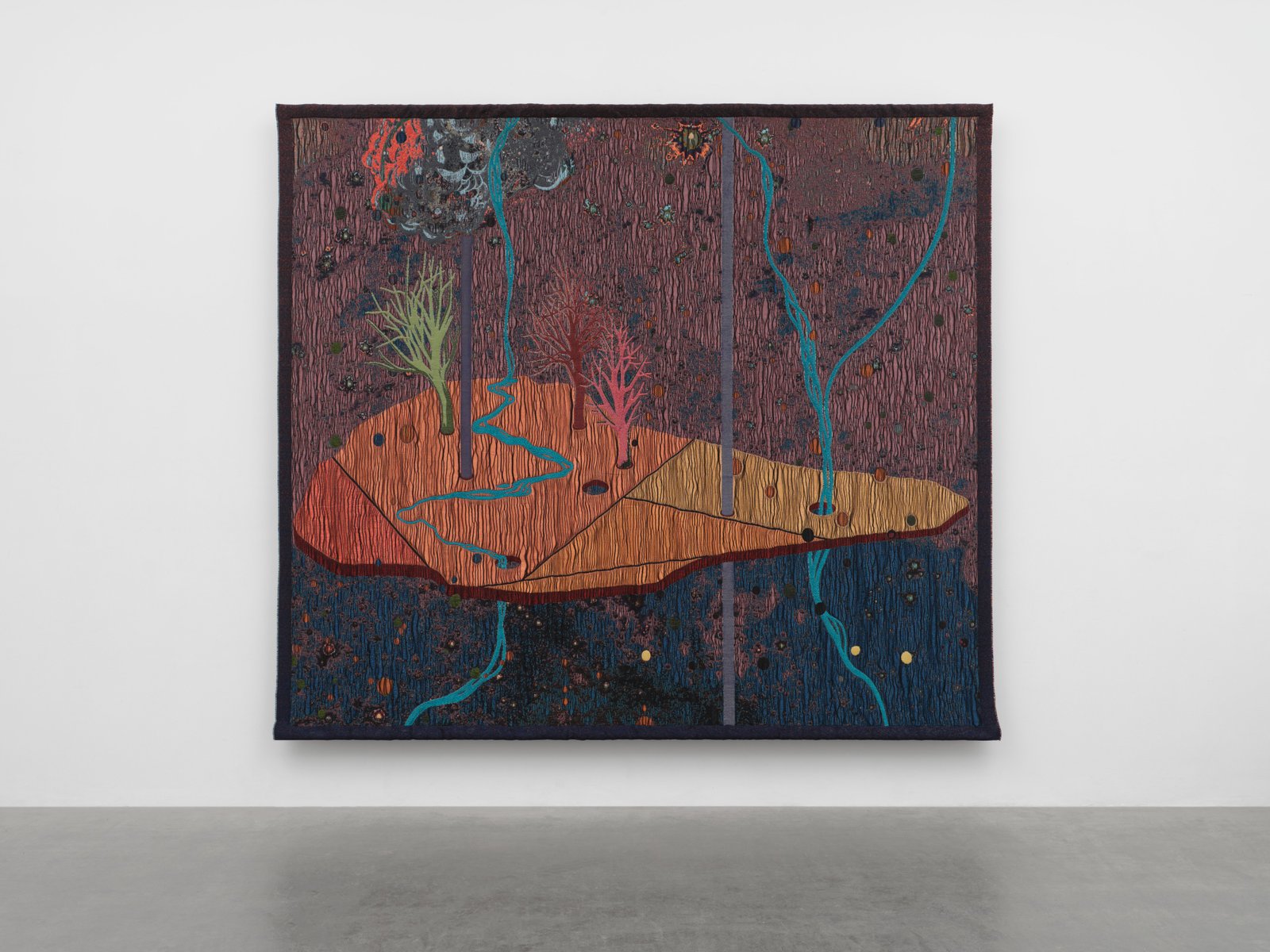
Otobong Nkanga, Cadence - Formation, 2025
Detail of Otobong Nkanga, Cadence - Formation, 2025

Detail of Otobong Nkanga, Cadene - Formation, 2025

Otobong Nkanga
Cadence - Formation, 2025
Woven tapestry | 118 1/8” x 137 3/4” x 5 1/8”
Ask about this work

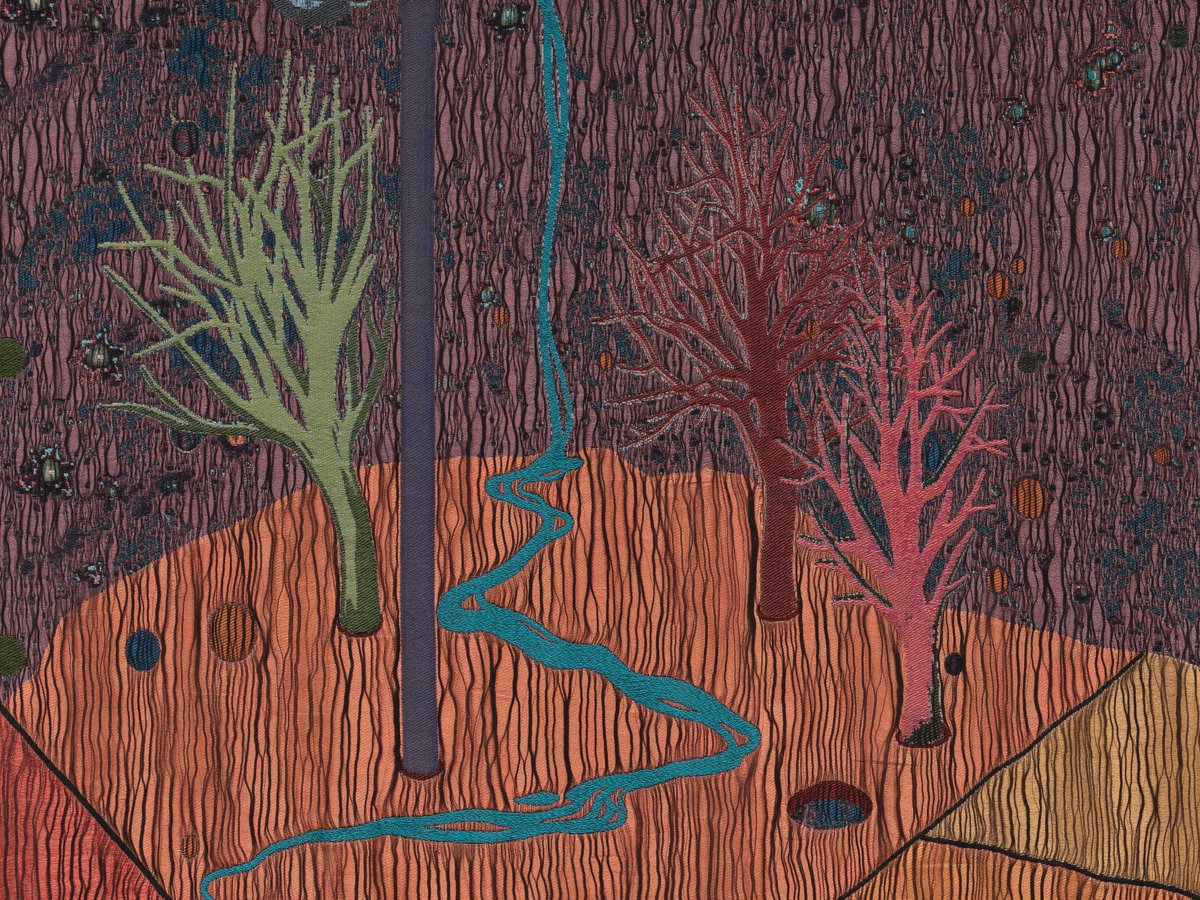
Otobong Nkanga's (b. 1974, Nigeria) multidisciplinary practice examines the complex social, political, and material relationships between bodies, territories, minerals and the earth. Her research-based practice includes drawing, installation, performance, photography, textiles and sculpture to translate the natural world and organize ideas around humans and landscapes, organic and non-organic matter, and Global North and Global South economies. "Cadence – Formation" (2025) is a tapestry that traces the entangled histories of land, resources and exploitation. In the composition, Nkanga evokes the cyclical patterns of mineral extraction, migratory journeys and regeneration—poetic meditations on both the resilience and vulnerability of ecosystems.

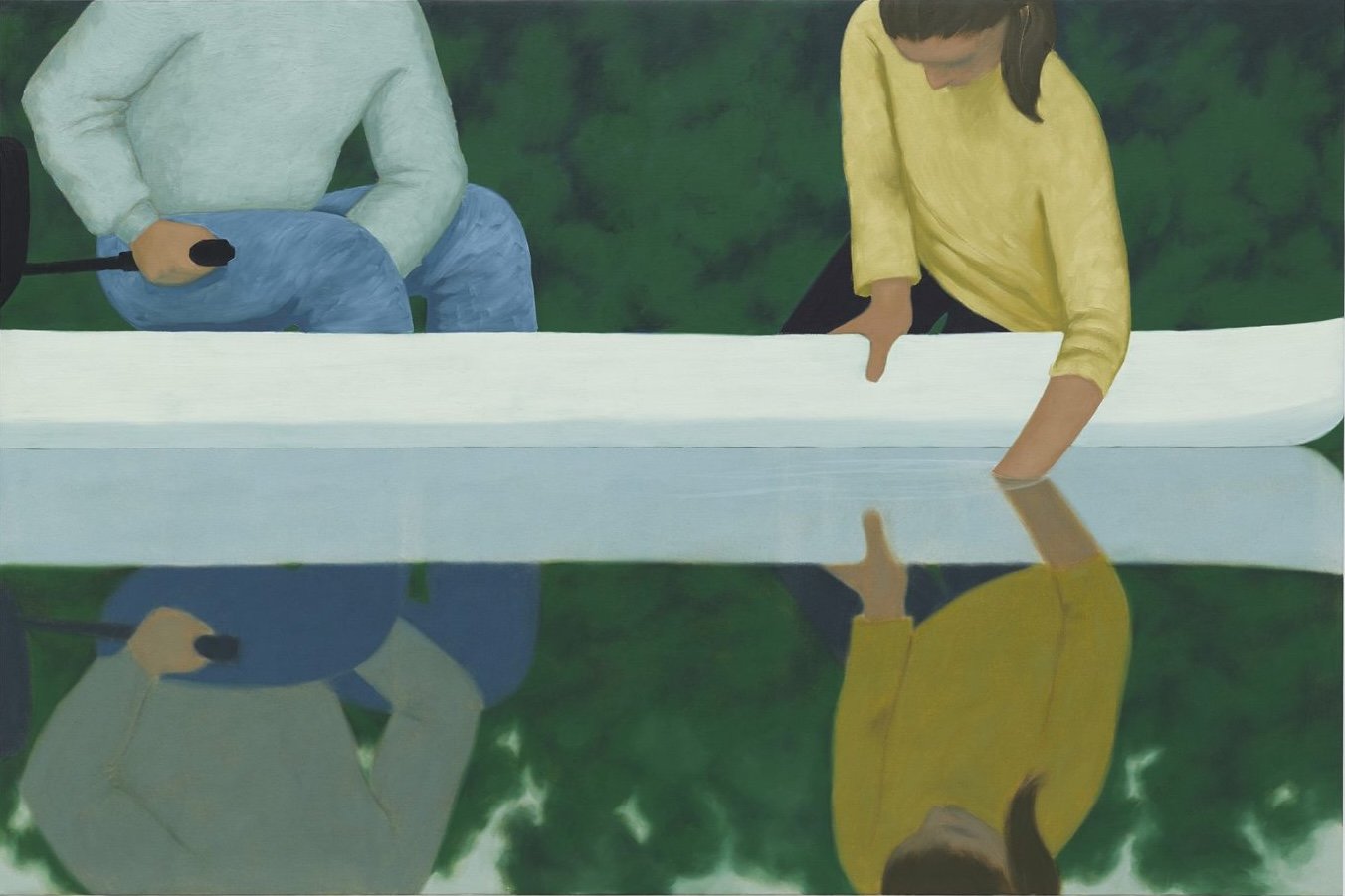
Henni Alftan, The Lake, 2017
Henni Alftan
The Lake, 2017
Oil on canvas | 51” x 76 3/4”
Ask about this work

The work of Henni Alftan (b. 1979, Finland) stems from a deep engagement with the medium of painting, its methods and its histories, resulting in pictures of daily life that are intimately familiar and yet intriguingly unknowable. The artist depicts everyday scenes and objects, often cropped or otherwise fragmented, each rendered with a studied economy of means. In spite of her pared-down aesthetic, Alftan’s experiments with color, texture, scale and perspective produce canvases rich in layered meanings that double as metaphors for seeing and comprehending the world through the physical properties of paint. "The Lake" (2017) depicts a heartwarming scene of a couple enjoying a day out on the water, with their reflections adding another dimension to the intimate, cropped composition.

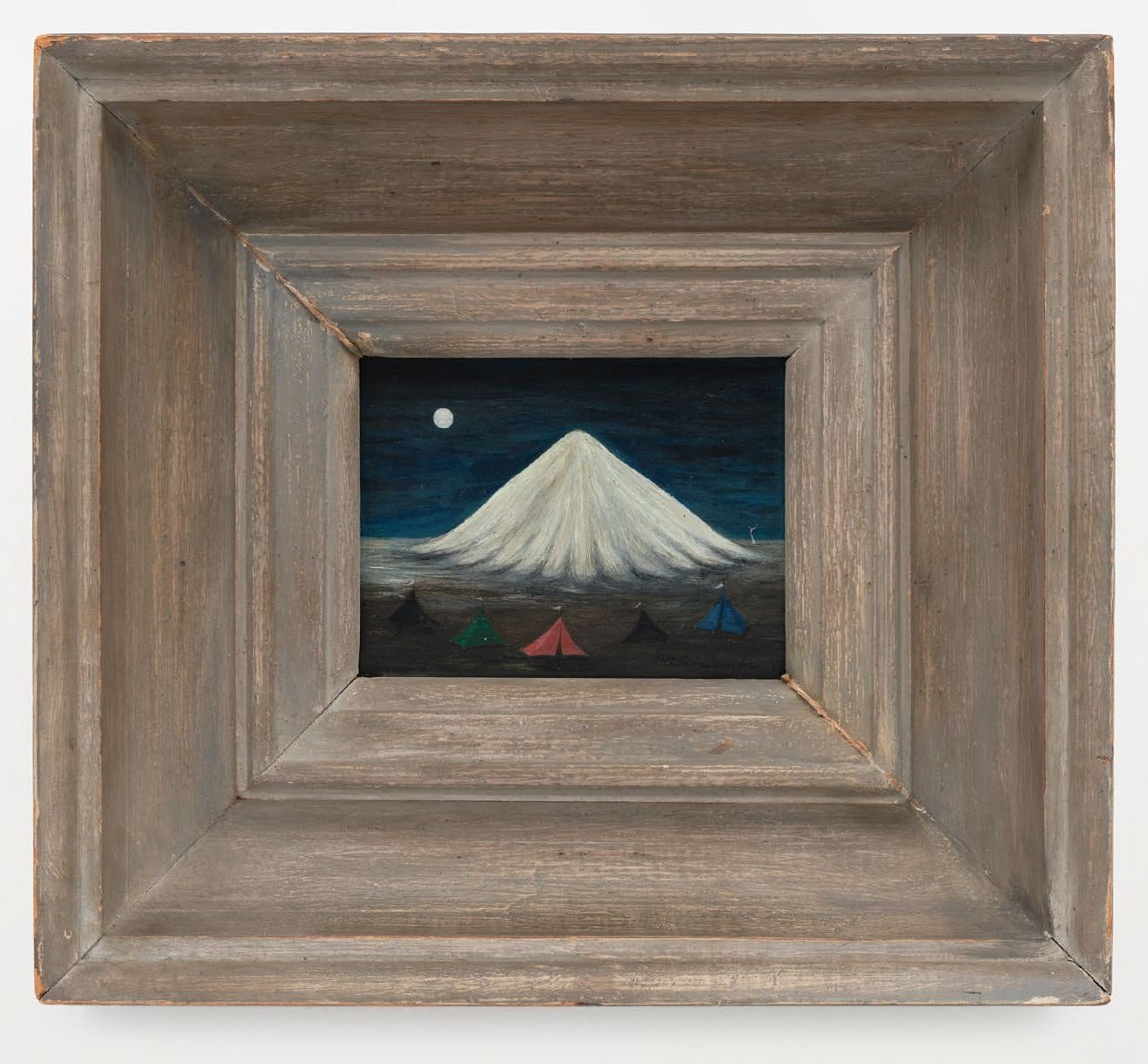
Gertrude Abercrombie, Encampment (White Mountain), 1948
Gertrude Abercrombie
Encampment (White Mountain), 1948
Oil on Masonite | 4 1/4” x 5 1/2”
Ask about this work

Gertrude Abercrombie (1909–1977) was a critical, under-considered fixture of midcentury American Surrealism. Well known as a champion of the Chicago jazz scene, Abercrombie earned the epithets “queen of the bohemian artists” and the “other Gertrude,” in reference to Gertrude Stein. Her diaristic paintings were preceded by the legacy of French Surrealism and succeeded by the Chicago Imagists of the 1960s, such as Christina Ramberg, Jim Nutt, and Roger Brown. Rooted in fantasy, Abercrombie’s diminutive dreamscapes, still lifes, and self-portraits feature a visual lexicon inspired by her daily life: shells, eggs, black cats, doors, bowls of fruit, Victorian furniture, and moonlit landscapes, among other subjects, are prominent motifs in her paintings.

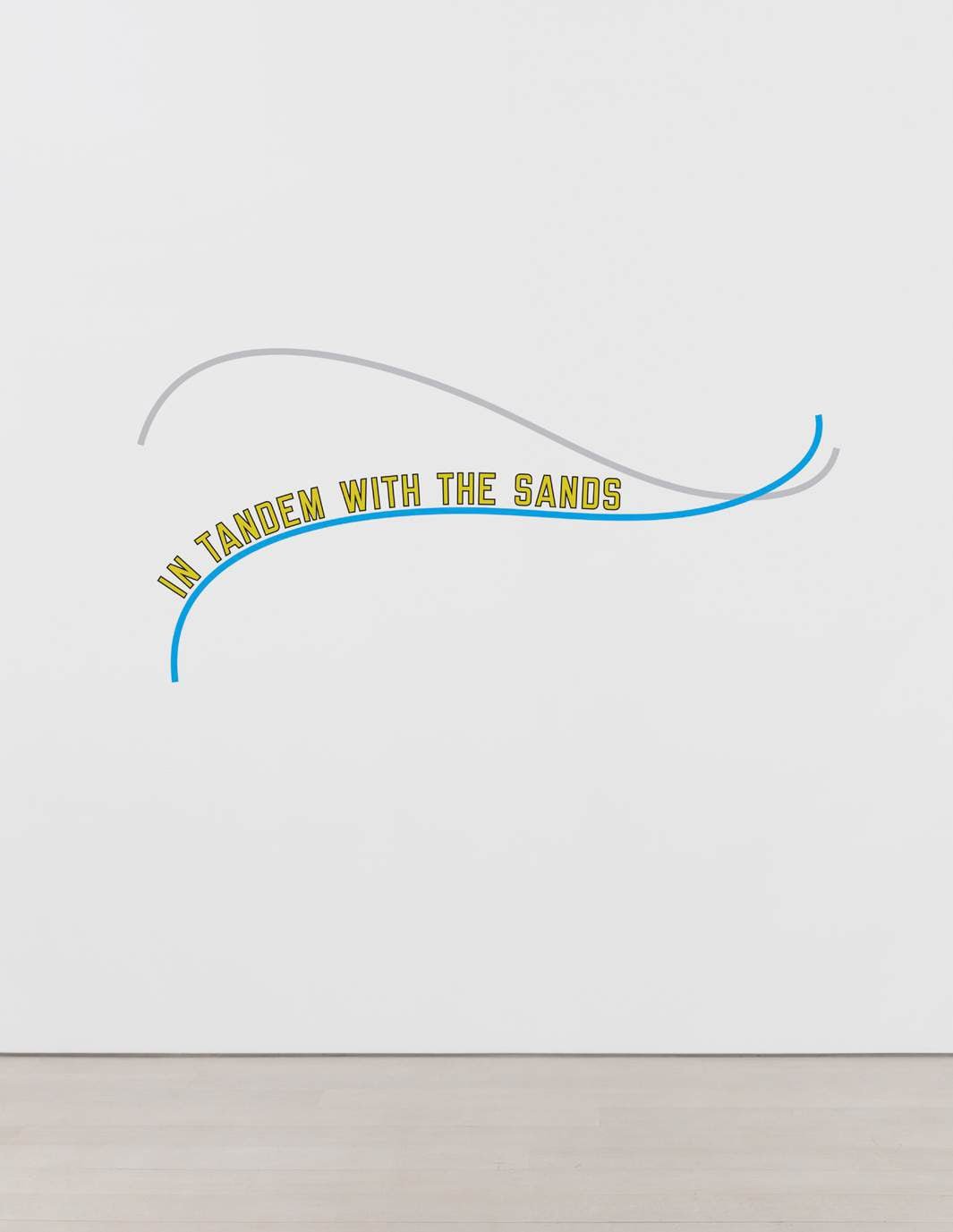
Lawrence Weiner, IN TANDEM WITH THE SANDS, 2010
Lawrence Weiner
IN TANDEM WITH THE SANDS, 2010
Language + the materials referred to | dimensions variable
Ask about this work

Lawrence Weiner (1942–2021) is a pioneering conceptual artist known for using language as a medium. His work emphasizes the idea that the conception and communication of an artwork are as significant as its physical manifestation. Weiner's art takes the form of text-based installations, where succinct and poetic phrases are presented on walls or other surfaces. By exploring the relationship between language, space, and meaning, Weiner challenges traditional notions of art, inviting viewers to engage with concepts and ideas rather than traditional art objects. 

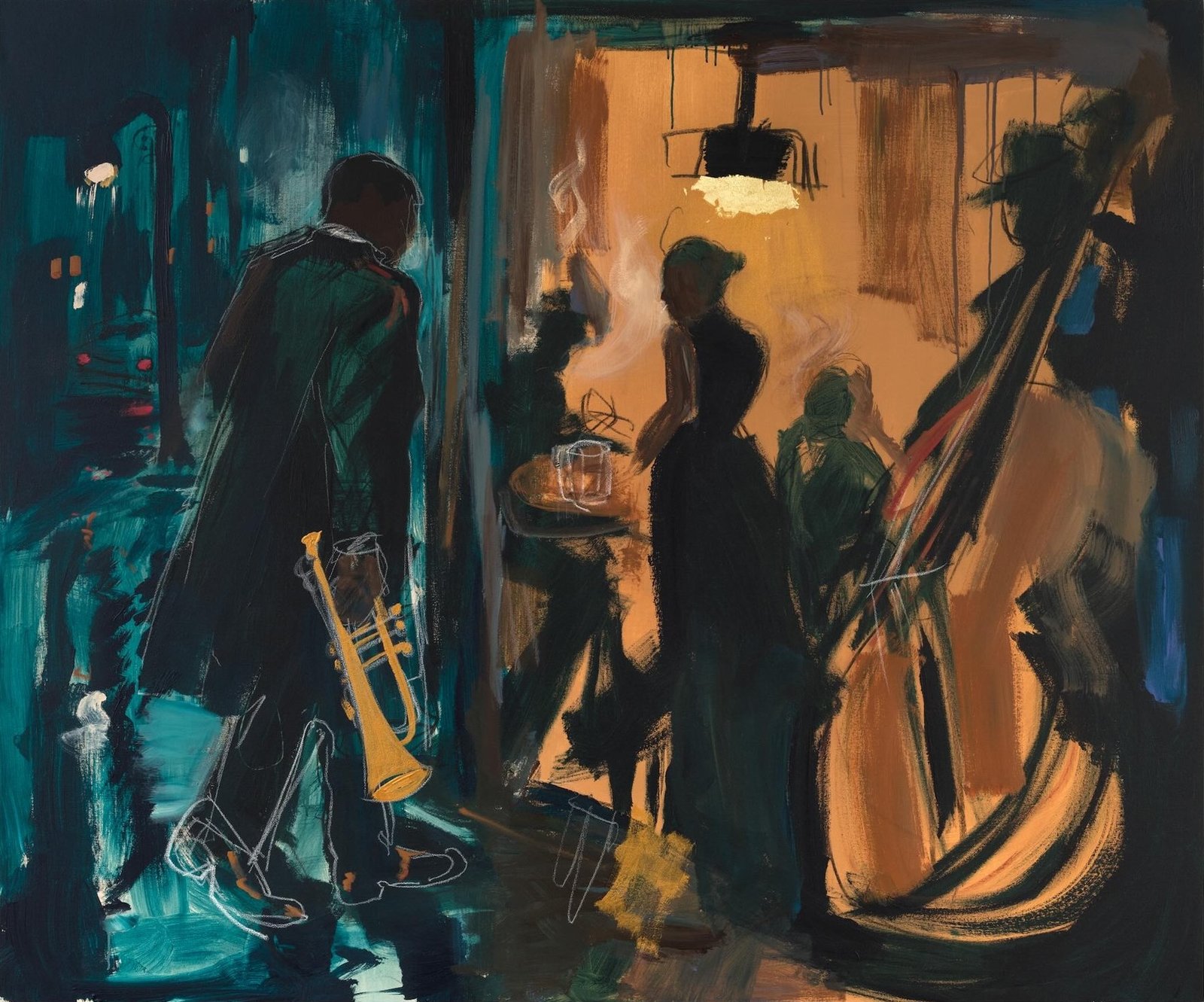
Ferrari Sheppard, Night bird, 2026
Ferrari Sheppard
Night bird, 2026
Acrylic, charcoal, and 24K gold on canvas | 70” x 84”
Ask about this work

Ferrari Sheppard (b. 1983, Illinois) creates paintings that celebrate the humanity of Black people in the Americas and across the African diaspora. Evoking a sense of nostalgia, his scenes are drawn from personal memories and lived experience. He frequently incorporates gold leaf into his canvases, a material that evokes sacred imagery, reverence, and commemoration. "Night Bird" (2026) captures the atmosphere of a cool jazz club after midnight. Warm light spills from the bar onto the street, creating an inviting glow. The scene conveys a sense of intimacy and ease, suggesting a welcoming refuge from the outside world.

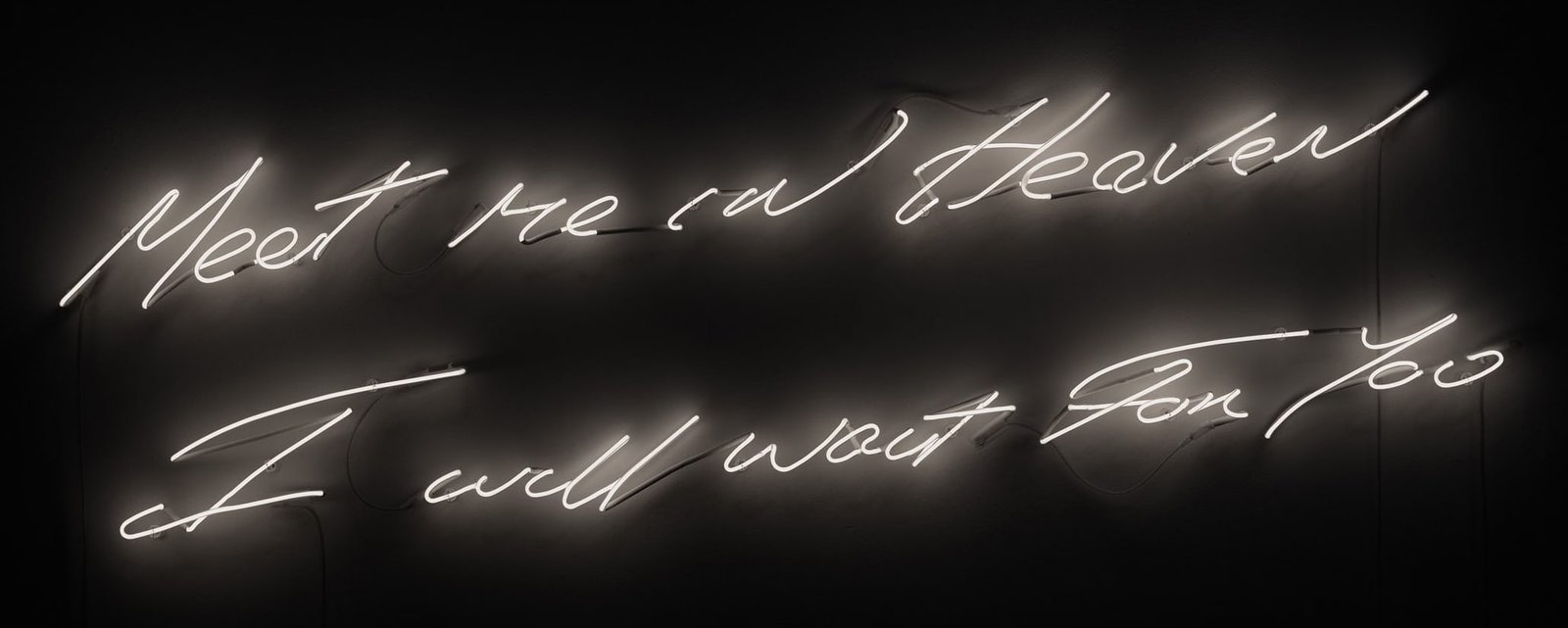
Tracey Emin, Meet Me In Heaven I Will Wait For You, 2004
Tracey Emin
Meet Me In Heaven I Will Wait For You, 2004
Neon (warm white) | 36" x 118 1/8"
Ask about this work

Tracey Emin (b. 1963, London) looks to her life for her primary material. With soul-searching candour, she probes the construct of the self but also the very impulse to create. Unfiltered, irreverent, raw, she draws on the fundamental themes of love, desire, loss, and grief in works that are disarmingly and unashamedly emotional. Captivated by the power of words, she often begins her creative process by writing. In the case of her neon works, she starts by penning a phrase that best captures the sentiment she is feeling at that moment. These handwritten notes are then passed onto a neon light manufacturer, who then twists the colored light tubes to mimic her unique handwriting on a large scale.

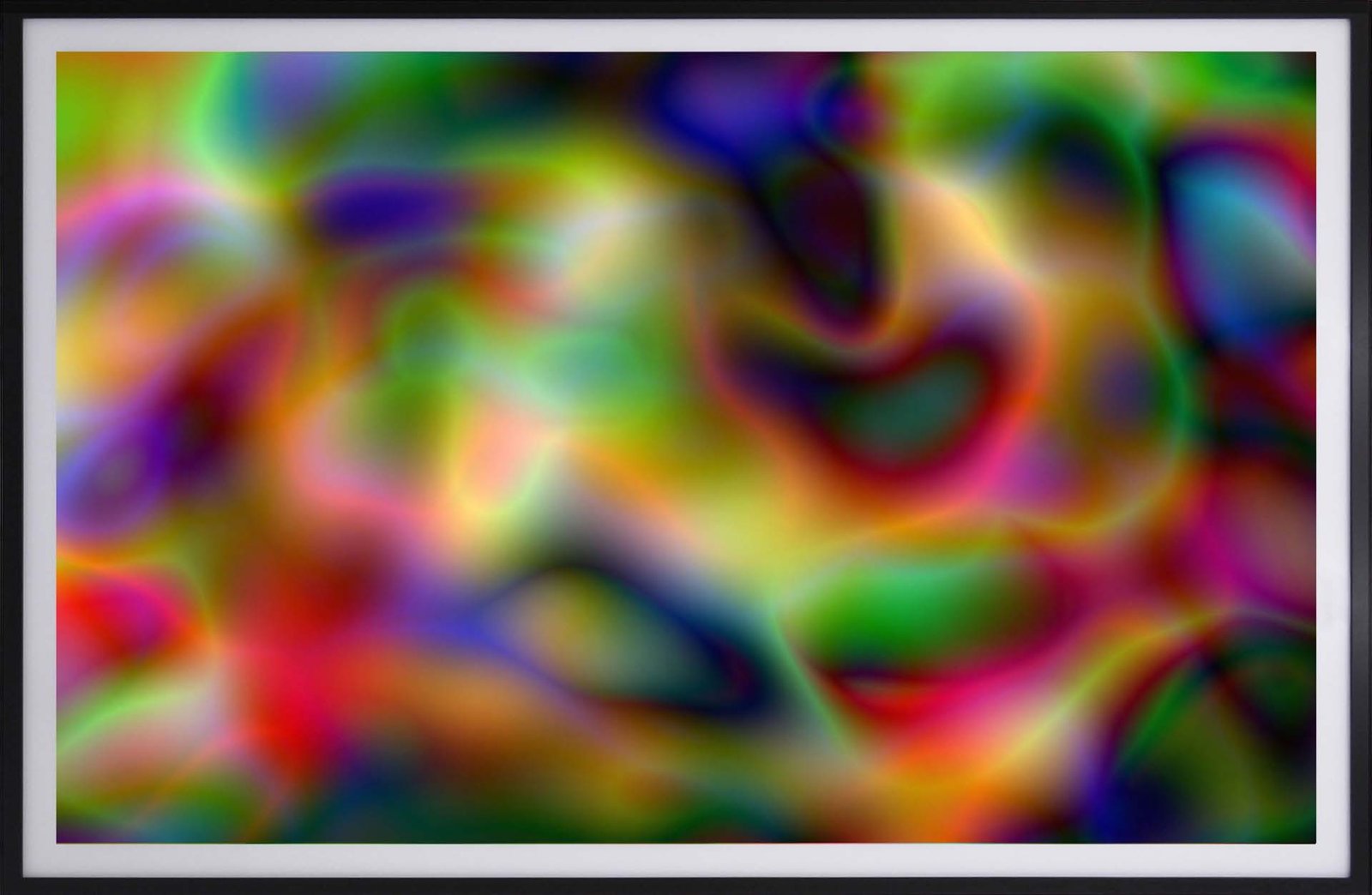
Thomas Ruff, Substrat 36 II, 2007
Thomas Ruff
Substrat 36 II, 2007
C-print | 51 1/8” x 76 3/8” x 2 3/4”
Ask about this work

Thomas Ruff (b. 1958, Germany ) rose to international prominence in the late 1980s as a member of the Düsseldorf School, a group of young photographers who had studied under Bernd and Hilla Becher and became known for their experimental approach to the medium and its evolving technological capabilities. Ruff in particular made a radical break with the style of his teachers, establishing a distinct approach to conceptual photography through a variety of strategies, including the use of color, the purposeful manipulation of source imagery—originally through manual retouching techniques and eventually through digital methods—and the enlargement of the photographic print to the scale of monumental painting. Ruff’s "Substrat" series begun in 2001 and is emblematic of his experimentation with the manipulation of early digital formats. Seeking to create a purely abstract photographic image, the artist found that he could do so by blowing up images from Japanese manga cartoons to the point where all identifiable detail is lost, resulting only in psychedelically hued, amorphous forms. This body of work stems from the artist’s interest in virtual imagery that no longer seems to depict reality, but rather functions as a means of transmitting visual information electronically.

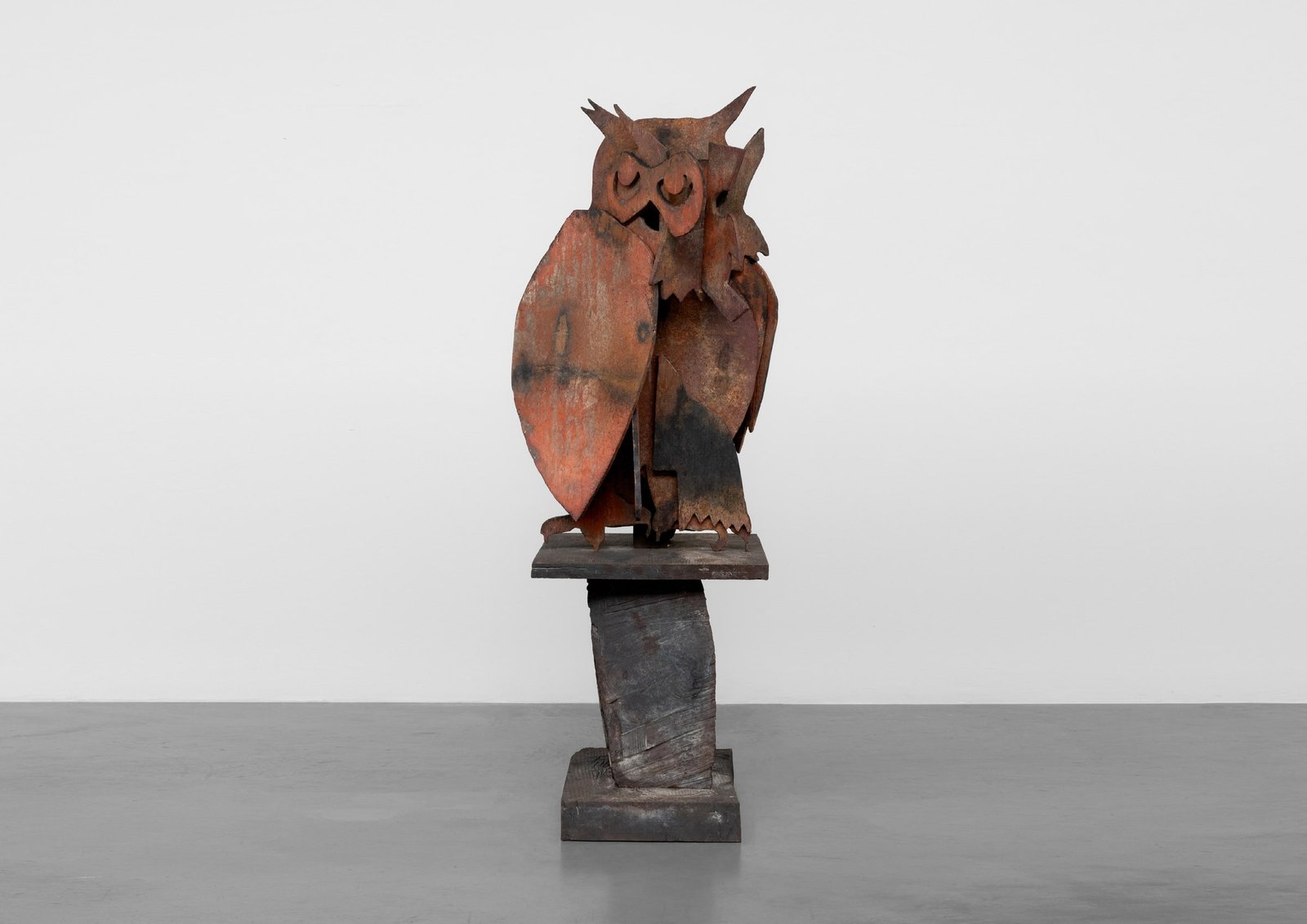
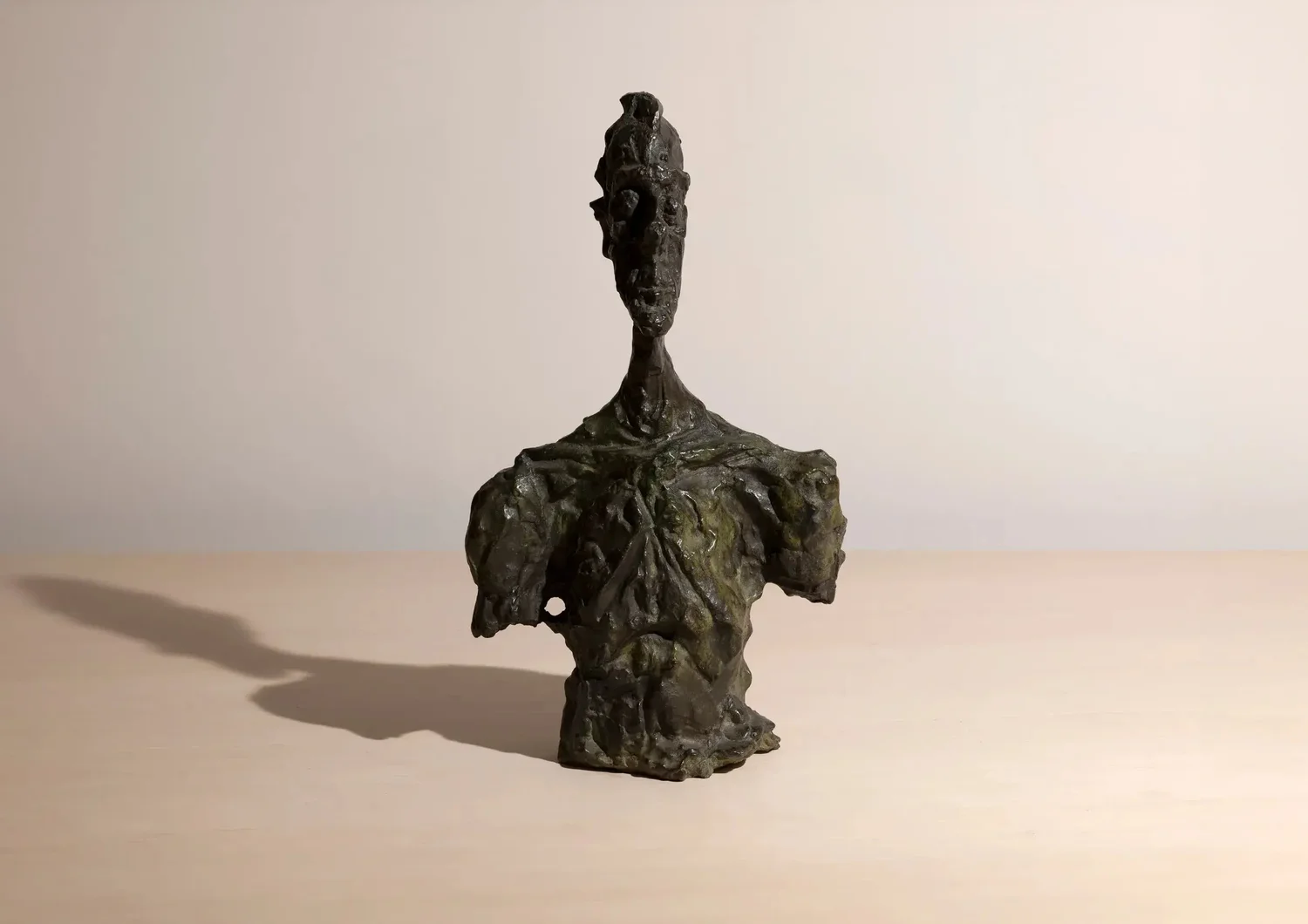
Thomas Houseago, Ranch Owl, 2024-2025
Thomas Houseago
Ranch Owl, 2024-2025
Bronze | 69 7/8” x 25 1/4” x 26 1/8”
Ask about this work

In the mid-2000s, Thomas Houseago (b. 1972, United Kingdom) established his career with monumental sculptures of hulking, skeletal figures and hollow-eyed masks. Working with traditional materials—including clay, plaster, wood, and bronze—alongside iron rebar and hemp, he constructs chimerical sculptures that reveal the process of their making. Passages of preparatory graphite or charcoal drawing remain visible on the finished works, as do handprints and trowel marks. With raw, rough-hewn surfaces and flat planes of material that bridge sculpture and drawing, these figures explore questions of personhood and its relationship to violence, power, and fragility. At once massive and fractured, geological and improvised, imposing and vulnerable, they hold seemingly contradictory qualities in tension. A symbol of mystery, wisdom, and vigilance, Houseago considers the owl his spirit animal.

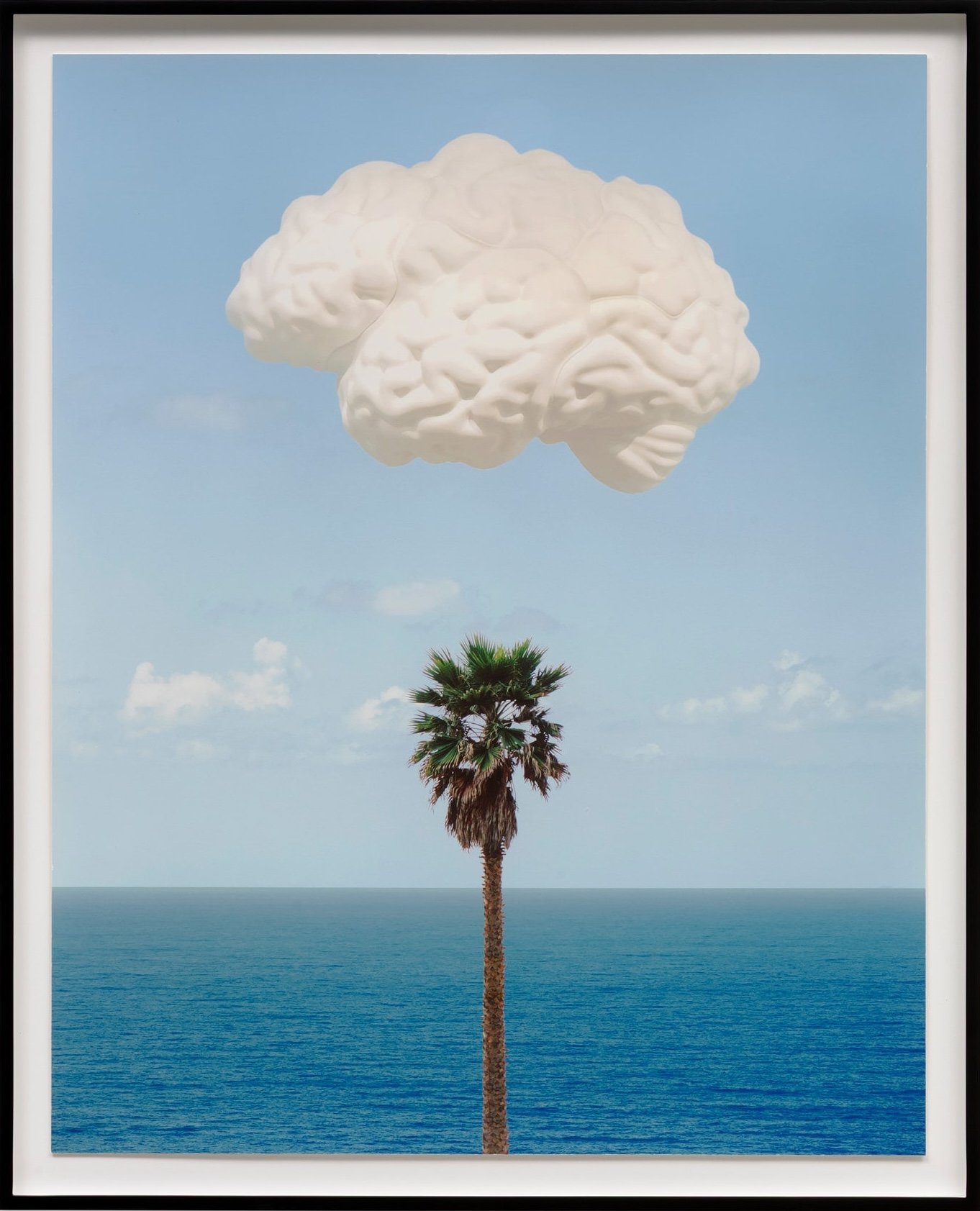
John Baldessari, Brain/Cloud (With Seascape and Palm Tree), 2009
John Baldessari
Brain/Cloud (With Seascape and Palm Tree), 2009
Inkjet print | 31 3/4" x 25 3/4" x 1 3/4"
Ask about this work

John Baldessari (1931–2020) was an innovative force in contemporary art, one who expanded its parameters by insisting on the inextricable relationship between images and language. Over five decades, he developed works rooted in appropriation, erasure and montage, using recombined fragments to dismantle familiar narratives and construct new ones. Baldessari repeatedly turned his eye to his everyday surroundings, bringing commonplace objects into dialogue with contemporary art. His limited edition print "Brain/Cloud (With Seascape and Palm Tree)" (2009) distills a monumental sculptural installation he had developed for his 2009 retrospective, "Pure Beauty", into a succinct, two-dimensional composition. Against a tranquil ocean backdrop, a lone, towering California palm rises beneath a white cloud shaped into the contours of a human brain. As a longtime Southern California resident, Baldessari was fascinated by the palm tree—a non-native species whose lanky proportions both mimicked his own and made it an ironic symbol of the region. By pairing this local emblem with a brain-shaped cloud, Baldessari playfully evokes Surrealist visual puns and the human habit of finding familiar forms in the sky—turning the horizon into a whimsical portrait of creative thought itself.

Emil Sands, The Chief, 2026
Emil Sands
The Chief, 2026
Oil on linen | 50” x 55”
Ask about this work

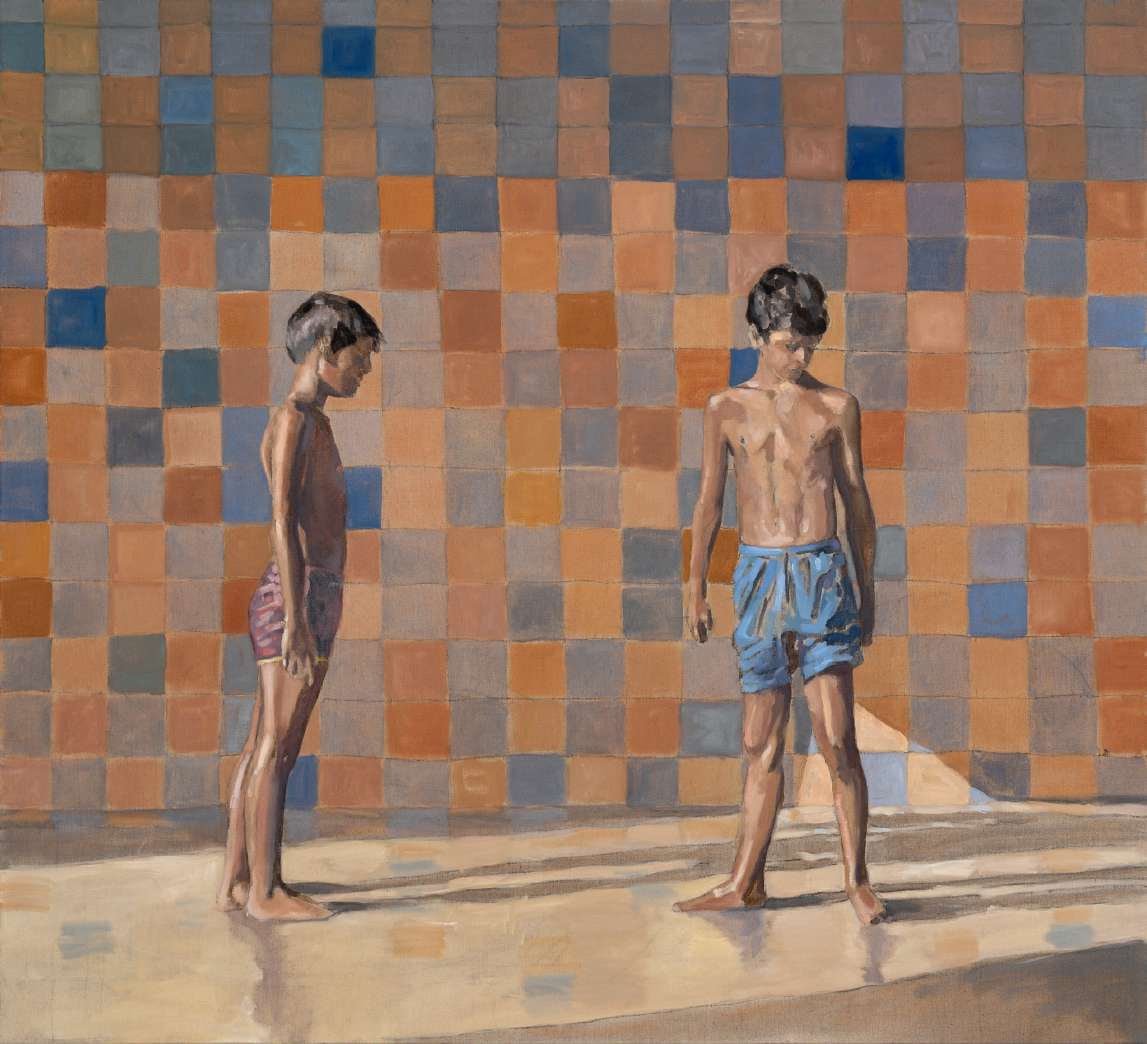
Emil Sands (b. 1998, United Kingdom) explores the complex psychological territory between seeing and being seen. Through a focused exploration of physical form and the ways in which we present ourselves, Sands paints a world rich with classical allusion and contemporary engagement. His paintings are at once portraits and landscapes; mindful of the codes and orthodoxies of genres, he plays with their conventions while addressing themes of vulnerability and exposure drawn from personal experience. Across Sands’ paintings, the figure is never incidental. Bodies are carefully positioned – offset, clustered or held apart; freighted with Sands’ acute awareness of the implications of gesture, posture and sightline. These compositional decisions generate subtle but persistent tensions: between individuals within a group, interior states and outward appearance, and the act of looking and being looked at.

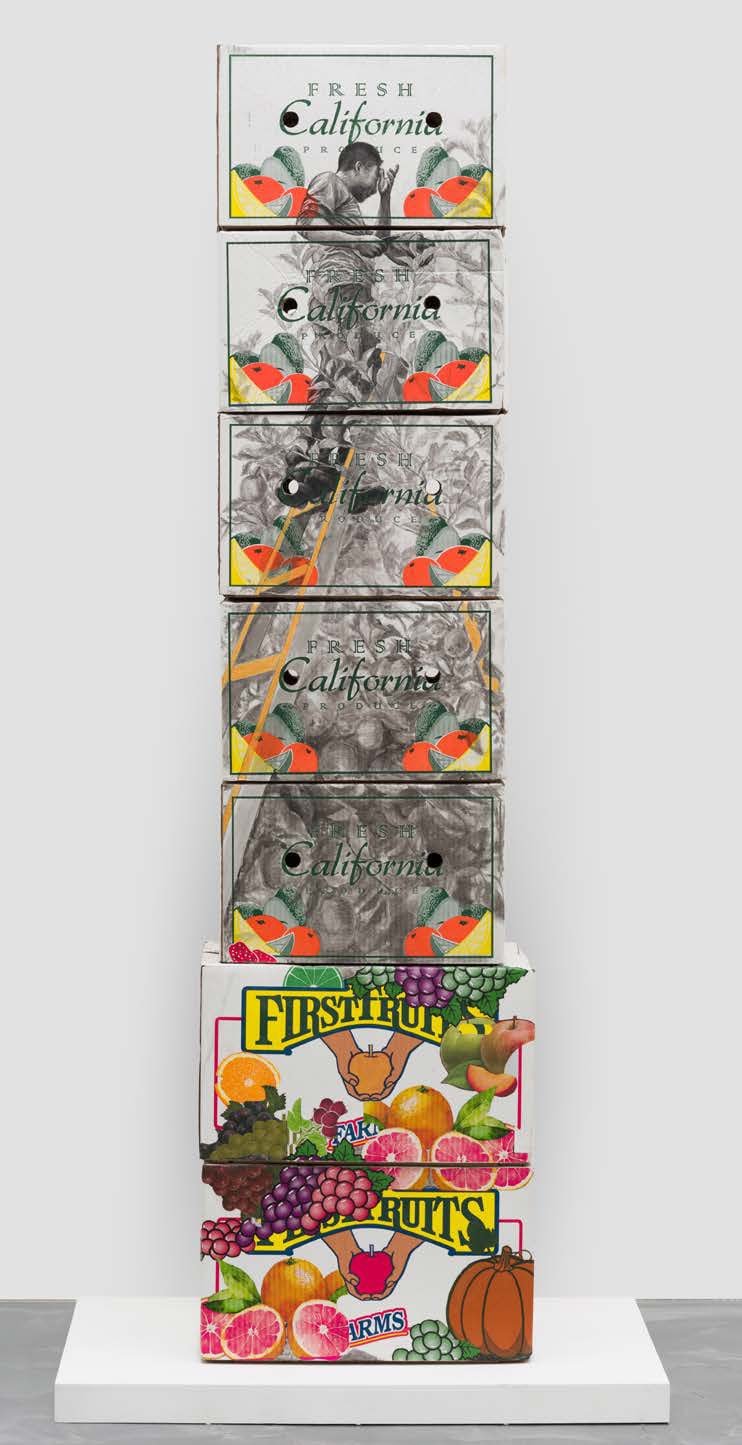
Narsiso Martinez, Premium Fresh, 2026
Narsiso Martinez
Premium Fresh, 2026
Ink, Gouache, Charcoal, Acrylic, and Collage on Fruit Boxes | 78.5" x 20" x 13.75"
Ask about this work

Narsiso Martinez’s (b. 1977, Mexico) drawings and mixed media installations include multi-figure compositions set amidst agricultural landscapes. Drawn from his own experience as a farmworker, Martinez’s work focuses on the people performing the labors necessary to fill produce sections and restaurant kitchens around the country. Martinez’s portraits of farmworkers are painted, drawn, and expressed in sculpture on discarded produce boxes collected from grocery stores. In a style informed by 1930s-era Social Realism and heightened through use of found materials, Martinez makes visible the difficult labor and onerous conditions of the “American farmworker,” itself a compromised piece of language owing to the industry’s conspicuous use of undocumented workers.

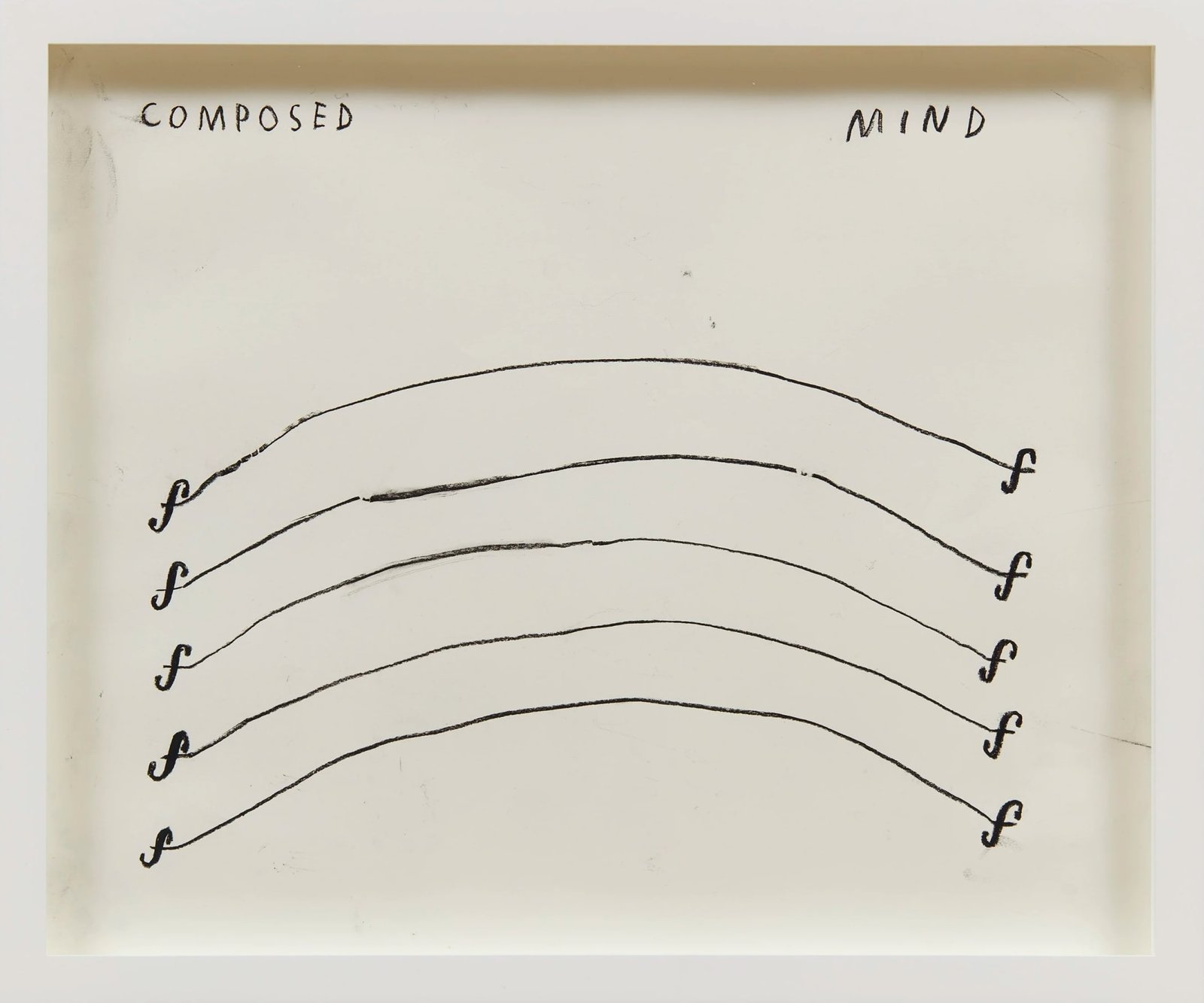
Christine Sun Kim, Composed Mind, 2026
Christine Sun Kim
Composed Mind, 2026
Charcoal on paper | 14” x 17”
Ask about this work

Christine Sun Kim (b. 1980, California) is a Deaf artist who has developed a renowned artistic practice examining the social role of sound, the power imbalances between the hearing world and the Deaf community, and the politics of audibility. Through her work, she interrogates how sound functions as a form of social currency and how oral languages shape systems of communication, access, and power. Musical notation, written language, infographics, American Sign Language (ASL), the use of the body, and strategically deployed humor are all recurring elements in her practice. Working across drawing, performance, video and large scale murals, Kim explores her relationship to spoken and signed languages, to her built and social environments, and to the world at large.

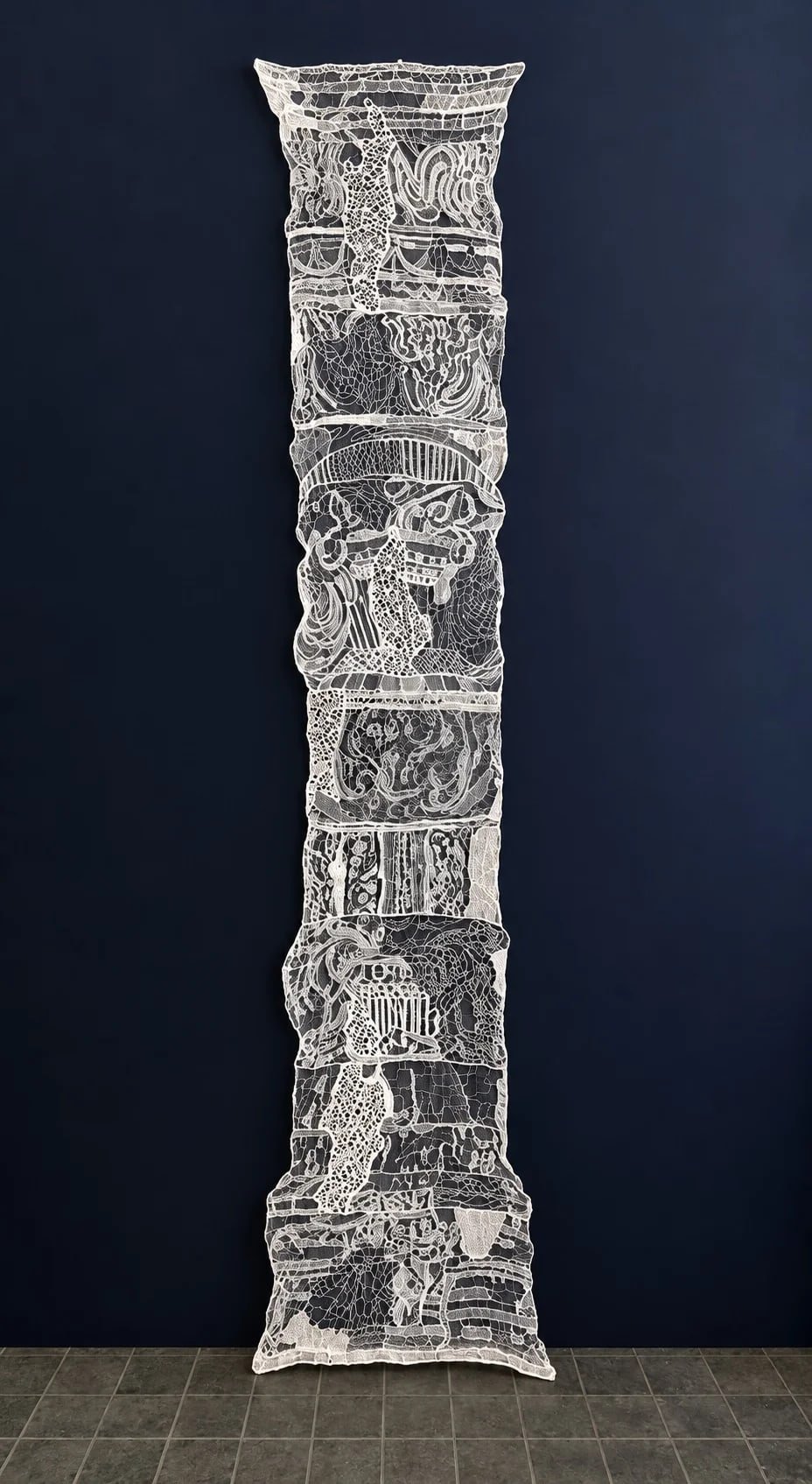
Sumakshi Singh, Colomn II, 2026
Sumakshi Singh
Colomn II, 2026
Thread & Lace Drawing | 96” x 24” x 1”
Ask about this work

Sumakshi Singh (b. 1980, India) works in thread and lace to meticulously craft delicate architectural forms. Her work explores how memory endures as the spaces that hold it disappear. References range from her demolished ancestral home to the columns of cultural monuments, questioning the permanence associated with concrete, brick, and stone. As familiar structures dissolve, Singh asks what we choose to hold onto: our stories, our identities, our beliefs. These “soft monuments” offer an intimate encounter with vulnerability, loss, and transformation. The patient labour of their making becomes a gesture of repair, through which memory is neither preserved intact nor erased, but continually reassembled.